

Suez RV Réunion’s expertise is not only about analysis, safe pretreatment and packaging of hazardous waste : it includes the logistics organization, from the transport of this waste to its final treatment in mainland France. “A colossal job”, replacement Arnaud Serron, sales manager, with regard to the obligations to be respected and the numerous parameters to be taken into account.
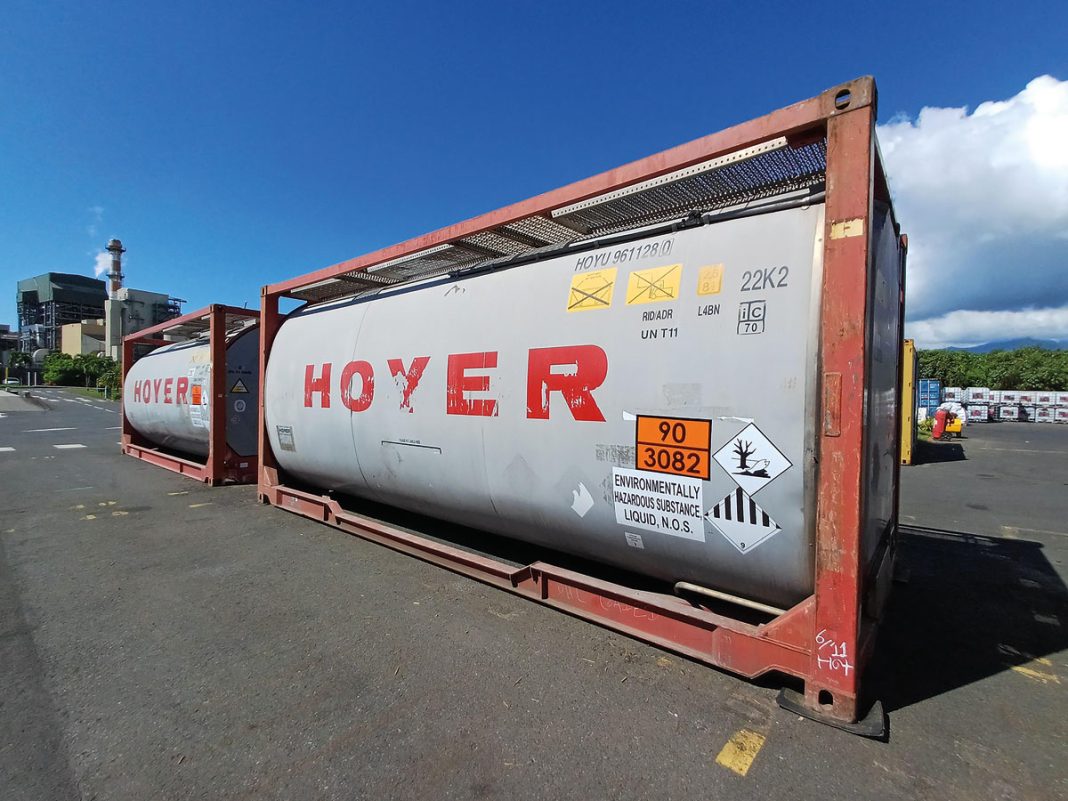
This is a little-known side of the Suez Recycling and Recovery Réunion professions : organizing shipments of hazardous industrial waste (DID) towards the metropolis. To its customers, Suez RV Réunion ensures comprehensive management of hazardous waste from their collection to their elimination or recovery in mainland France.. On a Reunion Island deposit estimated at 9,000 to 10,000 tonnes per year, the company processed 7,200 tonnes in 2025. This liquid or solid waste is centralized, analyzed, prepared and packaged on the Saint-André DID platform. Lack of local processing channels, they are evacuated throughout the year to France. At the rate of two to three shipments per month, 440 containers were loaded on ships at the port of Pointe-des-Galets in 2025. The beginning of a long journey… “To the port of Le Havre, it takes three to four months of transport”, reports Arnaud Serron, sales manager of Suez RV Réunion. “In this sense, the cargo ships serving our island actually come from Asia. Before taking the road to Europe via the Cape of Good Hope, they stop at different ports to drop off and load cargo. This route makes DID logistics complex to organize from Reunion Island. This organization employs three full-time people : our export unit”.
Two transshipments, three boats per trip
From Reunion, these containers actually take three boats before reaching their destination. A first transshipment takes place in Mauritius, a second in South Africa. Added to these two stages are the hazards of maritime transport of goods.. So many possible stopovers which must be anticipated to be certain, if applicable, to have the necessary authorizations for the berthing of ships carrying dangerous goods such as waste.
Logistics heavy with responsibilities
To ensure regulatory compliance of shipments, it is therefore imperative to carefully complete the documents ensuring strict compliance with the international standards provided for by the Basel Convention on the transport of hazardous waste. This prohibits the export of waste from OECD countries to countries that are not members of this international organization., traceability must be impeccable. In France, the mandatory traceability declaration is made on the Trackdéchets digital platform. in parallel, notification files detailing information relating to each type of hazardous waste, his journey and destination, are addressed, for request for consent, to the competent authorities of each country where the ship is likely to make a stopover. “Up to around thirty authorizations are sometimes necessary. However, obtaining consent takes between 3 and 6 months and they are only valid for one year. : it’s a huge work of anticipation”, emphasizes Arnaud Serron. Without forgetting the compliance of loads with regulations applying to modes of transport of dangerous goods : for the road part in Reunion and mainland France, ADR regulations ; on sea, code maritime IMDG ; for the air, HERE IS DGR.
Valuable expertise
“The export unit knows these regulations inside out. » And it is this mastery that allows Suez RV Réunion to perfect its logistics plan by optimizing costs at all levels : from stuffing in Reunion to unloading in mainland France, going through all the stages of routing. With, at the key, price proposals now lower, while the volume of DID grows from year to year, as shown by the assessments of the REP sectors.