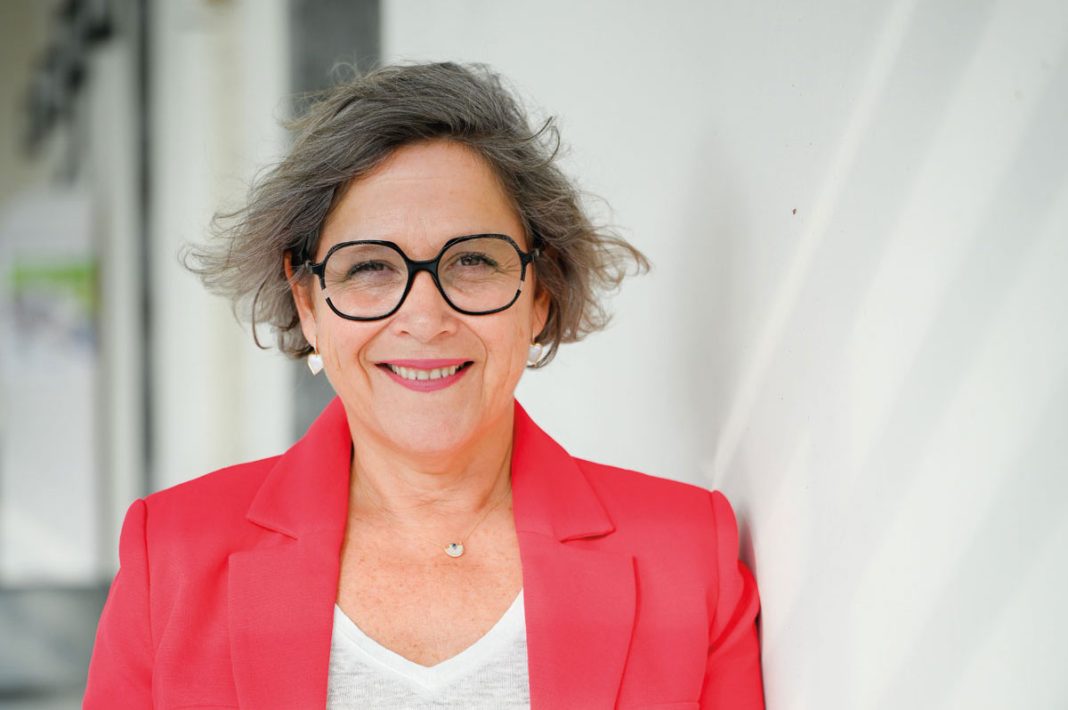

MEDEF Réunion unveils its White Paper this month. A flagship achievement of the 2026 roadmap supported by its president, Katy Hoarau. Titled “Together, heading towards a robust Reunion economy », this work traces strategic lines organized into sectoral sheets. These highlight the economic opportunities of each sector, as well as their concrete impacts on society. This work expresses the prospective vision that MEDEF Réunion and its management team carry today.. Its ambition is to unite economic players around a central concept : robustness. A notion that goes beyond resilience, to anticipate crises and adapt to global changes. Because robustness is the essential condition for opening a new chapter in the economic history of the island.. A chapter where, despite the uncertainty, Reunion has the assets to progress. Its position in the Indian Ocean, between Africa and Asia, today gives it back strategic value. In addition to its level of development, its infrastructure and skills, she has unique interpersonal skills : living together. The people of Reunion are true citizens of the world. How to transform these assets into “shared prosperity” ? How to promote them on an economic and human level ? The question is not new, but MEDEF Réunion undoubtedly provides the most complete and structured response to date. And this is where an even more ambitious challenge emerges : “Change our view of ourselves, and the one that the others carry on Reunion. » As Katy Hoarau points out in the interview she gave us, the key to the future of Reunion lies in this paradigm shift. Too, in this interview, the president of the employers’ organization does not just restate her convictions and her vision : she delivers the faith in the future that drives her.
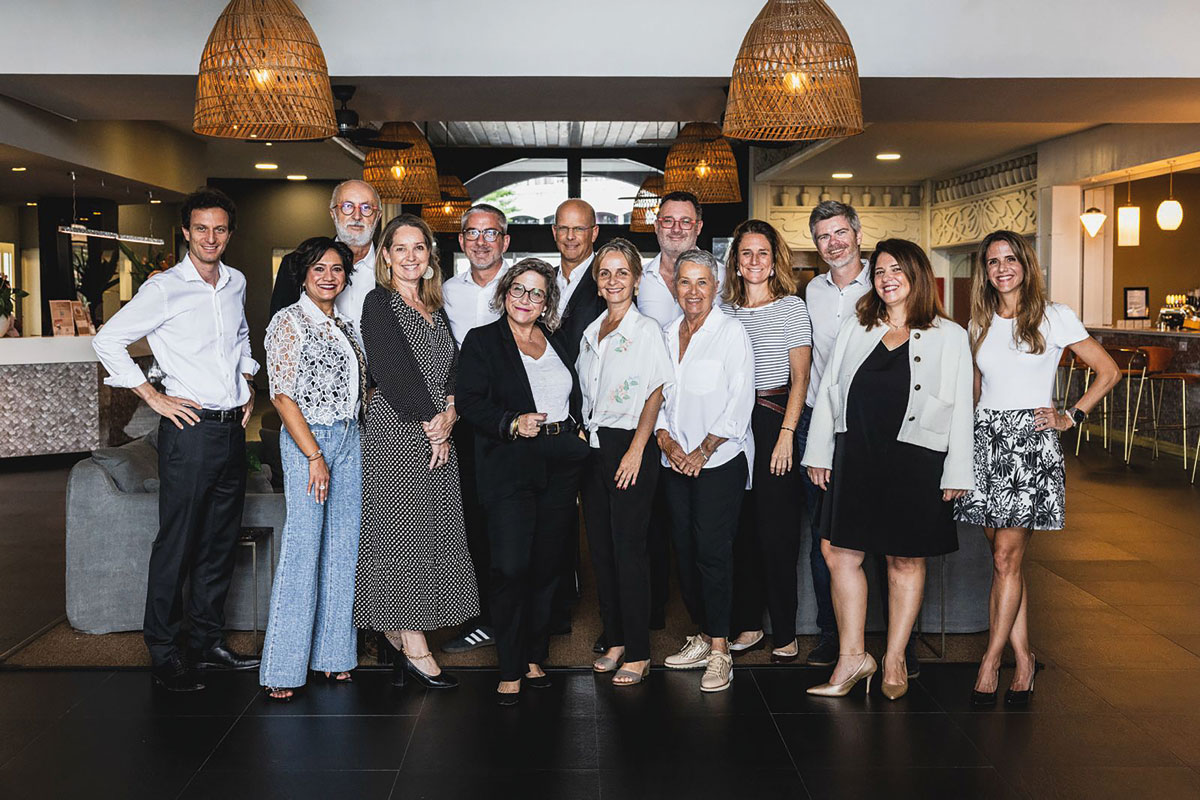
How do you assess the current economic health of Reunion Island? ?
The situation is generally worrying, and few elements suggest short-term improvement. Without strong signals to reassure economic players, visibility and business prospects will remain limited. It is uncertainty that dominates. For several years, the Reunion economy suffers successive shocks. Current support systems help maintain balance, but what we need, it’s a relaunch of activity. It is true that businesses are created, that certain sectors are resisting, but others, like construction, are going through a dramatic crisis. The context has not changed : we are still in economic crisis, with increasing impoverishment of the population, declining purchasing power and business closures. However, I admire the energy, the determination and resilience of business leaders, who continue to fight despite everything. But this resilience has its limits. We can no longer be content to endure : we must act and rethink our economic model. This is why I ran for the presidency of MEDEF Réunion at the beginning of 2025.. An employers' union's mission is to support its members, to play the game of parity, but he also has the responsibility, with other economic and social actors, to produce economic thinking for the island. This is the meaning of my action for over a year : unite the living forces, what I call “playing together”, and build a strategic vision for the future.
“Producing economic thought” : in what forms ?
We launched the “Together, heading towards a robust Reunion economy », as well as an economic observatory to better anticipate challenges. We also published a manifesto in the context of the presidential election, to fully contribute to the debate and defend an economy based on two ambitions : secure our essential capabilities and build shared prosperity. Short term, we must preserve existing systems that maintain the competitiveness of businesses and employment. But above all, we need a recovery plan for Reunion Island, followed by an orientation and programming law for the decades to come. Our ambition must be to move from an economy championing resilience to a more robust economy, capable of absorbing shocks and developing sustainably.
Who is this White Paper for? ?
It is aimed at French and European public authorities, to members of MEDEF Réunion, to businesses in general, and to all of Reunion society. It also aims to contribute to changing the image of Reunion Island. : that it is no longer perceived as an assisted territory, beneficiaries of public aid schemes, but as a strategic lever for France and Europe in the Indian Ocean.
What does the notion of “economic robustness” actually mean? ?
We started from a disaster scenario, a “crash test” : if Reunion stopped producing, how long would we last ? Our method consisted of lucidly identifying our dependencies and vulnerabilities, then ask us : how to transform our vulnerabilities into capabilities, and our capacities for prosperity ? How to turn our skills into strategic infrastructure to generate prosperity ? Economic robustness, it is our ability to lucidly look at our vulnerabilities and our dependencies, then to build the capacities that allow us to continue to function despite shocks. It’s no longer just about resisting or adapting to crises, but to anticipate them and prepare ourselves for major global changes. With the shift of decision-making centers to Africa and Asia, Reunion also finds a strategic position in the Indian Ocean. For all these reasons, we must work together for the future of the territory. Maybe we just need to dare to invent our own Reunion economic model : a model adapted to our realities, which allows us to produce more, to finance differently, to cooperate better and create truly shared prosperity. Take the example of financing, a real issue in this territory : Could we not bring together business leaders with funds to create a local financing tool dedicated to Reunion projects? ? I am convinced that we have what it takes to succeed.
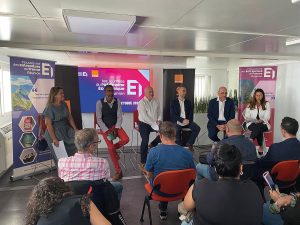
Economic heritage organized in Reunion, which will be held from October 2 to 4. Goal : raise public awareness of the business world and its professions, to young people in particular.
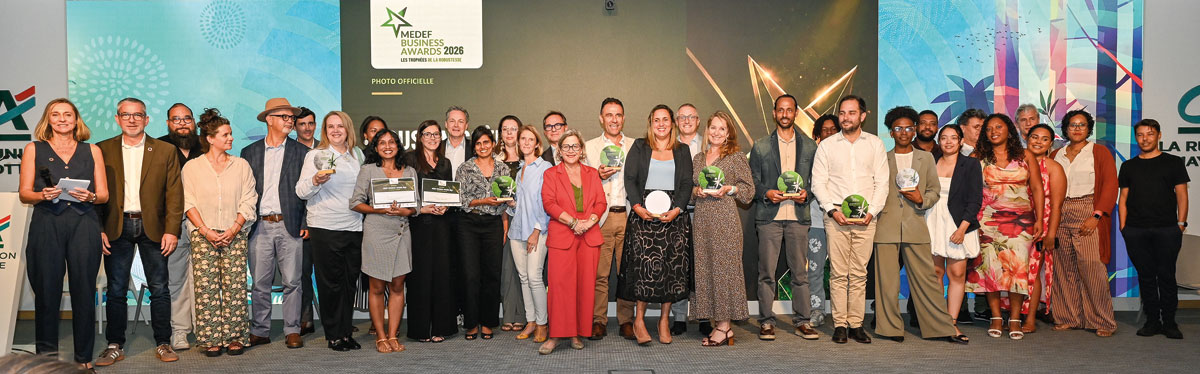
By renaming the MEDEF Business Awards “Robustness Trophies”, you give concrete examples of this resilience. What sets this year’s winners apart ?
The challenge is to change our view of ourselves and that which others have of Reunion Island.. These companies embody this transformation : they were able to take advantage of their vulnerabilities to turn them into performance levers, of innovation or prosperity. They understood that it was no longer enough to be resilient, but that we had to act to no longer suffer. These winners show determination and a desire to strengthen themselves to better face shocks.
The renewed Lodeom, the Posei is about to be, the dock dues extended until 2030… You defend these support measures for overseas businesses. Are these robustness factors? ?
These devices are essential. We fought collectively to preserve LODEOM and the tax assistance regime for productive investment. The economic world has mobilized, and the rulers ended up understanding their importance for our territory. A brutal removal of these measures would profoundly destabilize our economy and destroy many jobs. They compensate for structural handicaps linked in particular to remoteness, to the insularity and narrowness of our market. Our economic fabric is also mainly made up of very small businesses., whose margins of maneuver are particularly weak.
Isn’t the gradual reduction in public support one of the “shocks” that businesses should prepare for? ?
These systems must also better support the development of businesses. Consider the exemptions from employer contributions : today, they can function as a low-wage trap. They allow businesses to survive and create jobs, but they are not always enough to support their move upmarket. In particular, companies should be allowed to recruit more middle managers, essential to develop their business. The purpose of these devices must not be to maintain dependence, but to compensate for our structural handicaps while giving companies the means to invest, to move upmarket, to create more value and gain autonomy.
You therefore intend to continue discussions on these devices ?
For MEDEF Réunion, these measures must now support a recovery plan targeted in particular on strategic activities which contribute to securing our essential capabilities : energy, water, food, health, the skills, connectivity and our air and maritime services. In parallel, we need to produce more locally, in industry as in services, to create more value and shared prosperity. But our internal market cannot be our only horizon. Our regional basin must become a real space for development. Reunion can be a French and European support point in the Indian Ocean, at the crossroads of Africa and Asia. Our future is also at stake in the Mascarenes, in Madagascar and East Africa too.
From October 2 to 4, the first Economic Heritage Days were held in Reunion Island.. Local businesses open their doors to young people and their parents. Do Reunion companies suffer from a lack of image or notoriety? ?
The Economic Heritage Days are precisely an opportunity to put aside caricatures. Business leaders are women and men who take risks, invest, create activity and employment, and carry out projects with their teams. They also experience the difficulties of the territory : purchasing power, accommodation, mobility… with, in addition, entrepreneurial risk. Contrast employees and entrepreneurs, young and old, will not move us forward. On the contrary, we need to create bridges and play together. When I ask local manufacturers what their ambition is, they often answer me : grow Reunion Island and contribute to its development. Personally, my role as president of MEDEF Réunion is voluntary and I devote a large part of my time to it. I do it because I am from Reunion Island. The meeting, this is my village. And we take care of our village
What message did you bring to “Choose Outre-mer”, the demonstration organized on October 1 by the Minister of Overseas Territories, Naïma Mouchou ?
I prefer to say : “Make Reunion choose”. I carried the message that I just mentioned : changing the way we look at our island is an absolute necessity. I recently met a manager of a large French company who was considering investing in Mauritius.. When I asked him : “Why Mauritius and not Reunion ? », he cited the time zone and the Mauritian tax rate of 15%. He did not know that Reunion shares the same time zone as Mauritius, and that, in his sector, the effective tax rate is 7% ! French companies do not know Réunion. Many still think it’s a stone without opportunities. So I'm going to take my pilgrim's staff to tell them : “Mr. Industrialist, know that we need your skills, and that you will find investment opportunities here. » A first step has been taken : MEDEF Paris has just dedicated a special issue of its Inspir magazine to Reunion Island. We are also awaiting a study which will identify the promising sectors to preserve value in the territory and benefit as many people as possible.. This will be an additional information instrument.
Are you in favor of the arrival of investors from outside Reunion Island? ?
Yes, provided that they commit to Reunion and play the game of French sovereignty, without relocating the value to a parent company elsewhere.
In summary, you want the economic world of Reunion to come out of its defensive posture and be more daring.
I want Réunion to “detak baro” – to open its doors wide and push its limits ! That she dares, that it looks beyond its borders, that it exploits the entrepreneurial and innovative spirit that has always driven this island.
To go in which direction ?
To break this inevitability according to which we would not be able to dare or think big. I don't agree. This island, this company, has already proven that she is capable of a lot of things. Young Reunionese entrepreneurs must convince themselves that they have the means to see far. Some are already doing it and setting an example. We saw some at the last MEDEF Business Awards. We must change our view of ourselves.
You see in Reunion Island living together a “collective skill” to be structured and transmitted. Do you think it can be taught? ?
Living together, it's not just a slogan. It's a real skill. In the meeting, we know how to speak Chinese, if, African, European… We adapt, we live in a unique melting pot. Reunion is a mini-world capable of collaborating with everyone. Like New York. When I left Reunion Island at 17 to work in an international audit firm, I was transferred to New York, and Manhattan Square. It was a rare performance, even for Parisians, and I was proud of it because my ambition was to show that a Reunion Islander could be one of the best. What department have I been assigned to? ? Coordination of the audit of foreign subsidiaries of listed companies. The competence that was recognized to me, it was knowing how to work with Mexicans, Germans, Russians, Chinese… with everyone. And I was the only one in this situation. This skill, I didn't learn it from books : she was inside me, as it is in every Reunionese.
If you could bring together all the political and economic actors of Reunion around a table, what decisions would you ask them to make together ?
To agree to work together, to validate a common course, to set objectives and regularly monitor their implementation. We should also make what already exists work., but which is not or poorly used.
Is electronic invoicing a concern for you? ?
Non, things are going pretty well. There will undoubtedly be bugs, adjustments, but the tax administration has announced that it will show tolerance for those who engage in the process. A positive point that I want to highlight : electronic invoicing will prevent business leaders from losing receipts, which often happens when they make several purchases in a row. I am addressing this mainly to craftsmen, to small businesses. These losses represent a mental burden and are expensive, because they prevent you from recovering VAT or deducting these costs. Thanks to electronic invoicing, entrepreneurs will be able to better manage their cash flow, analyze their costs and establish precise quotes. It will free up time for business leaders. That said, let's be lucid : for the tax administration, it is also a means of securing the tax base.
On the other hand, payment deadlines pose a problem for many companies…
Payment deadlines between companies are very controlled. What I find scandalous, it's that, when a private company pays late, she is sanctioned. But when it comes to a community or a public body, nothing happens. We thus create a gap between the legal and the legitimate., which generates a two-speed society, source of frustration for entrepreneurs. Mixed with uncertainty, this situation undermines energies and discourages action. Which irritates me even more, these are public calls for tenders. We see local authorities favoring companies without activity in Reunion. Is this how we will build our future ? I am sure that there are mechanisms to integrate a regional priority criterion into calls for tenders. We must encourage local preference in public procurement.
You are thinking of the “Small Business Act” provided for by European texts ?
Notably. MEDEF Réunion has also decided to support this measure – the good purchasing strategy – by joining the SBA Réunion association..
The transfer of businesses will be one of the themes of the next general assembly of MEDEF Réunion, November 12th. Is Reunion as concerned as mainland France by this problem? ?
Yes. On transmission, I want to send a message to project leaders : before starting a business, monitor existing companies whose managers wish to retire. And consider a recovery with support. Here again, it’s about changing our outlook on entrepreneurship : instead of wanting to do everything alone, tell yourself that there is perhaps someone with expertise, a skill, who can train you and who to partner with. The possibilities are numerous.
In six months, it's the presidential election, described by some as “the most important since the post-war period”. Are you concerned about the current political environment? ?
Who wouldn't be worried in this context? ?
You have never really commented on being the first woman elected to the presidency of MEDEF Réunion. Doesn’t this election have symbolic significance for you? ?
I was also the first woman president of the Order of Chartered Accountants of Reunion Island.. It was never an end in itself for me, but it is an encouraging sign. This shows that society is evolving, that it is ready to accept a different economic vision, another way of embodying the presidency of an employers’ union. I think the key is diversity. I can't wait for other women to reach leadership positions. There are not enough of us yet.
Do you feel that the view of women leaders has changed in Reunion? ?
Changing the way we look at the role of women in the economy is part of our roadmap. Within MEDEF Réunion, we have a “Women of MEDEF” commission, which brings together business leaders and leaders. His work is recognized. This gives me increased responsibility as president. I tell myself that I must be up to the task. I feel like I'm holding a cane sword and leading the way ! If this can inspire vocations, I will be happy and proud.
Your career as a chartered accountant took you to London, in Paris, in New York, before continuing in entrepreneurship in Reunion. Does this international experience influence your current commitment? ?
When I returned to the island, I took over a small family business. My experience abroad first taught me that to project yourself outside the island, you must master English. It is a condition of our success. From this initiatory journey, I also remembered that Reunion is an exceptional society, unique in the world, with a unique story. Today’s Reunion Islanders are its heirs. We have a strong identity, a way of being, to live, to do that defines us. There is not a single Reunion Islander who does not love his island and who does not want to highlight it.
Do you feel that Reunion Island offers something that cannot be found anywhere else? ?
There is a motto in Reunion, which dates from the East India Company. I find it strikingly topical : “I will bloom wherever I am carried. » I believe that we, Reunionese, let us carry within ourselves a vitality of this kind. It’s what makes us champions of resilience. But today, it’s about stopping suffering and being more voluntary. For that, we must value ourselves.

moves
MEDEF Meeting : 18, rue Alexis-de-Villeneuve, St Denis
such. 0262 20 01 30
contact@medef-reunion.com