


A study carried out in Reunion highlights a less visible problem than notoriety : the gap between the desired reality and the reality perceived by customers.
A brand can be known, ancient, rentable, and firmly established in its market. At the same time it can begin to lose something more difficult to measure : its capacity to still be judged “relevant”. This is one of the lessons of a study carried out by Pigé in partnership with François Mandroux, by MC Consultants, with 656 Reunion residents aged at least 18 years old. The question of whether the reality that brands want to convey about themselves corresponds to that experienced by consumers, 24% of these perceive a real correspondence between the projected image and reality ; 54% have a mixed perception, corresponding to possible situations of “under- revelation” or “over-promise” ; 22% notice a significant gap between the image and reality. Behind these figures appears a crucial issue : a company can continue to do its job well while gradually becoming less readable, less distinctive or less desirable in the mind of the market. François Mandroux refers to this phenomenon as “perceptual obsolescence of brands”, echoing “functional obsolescence”.
Notoriety is no longer enough
“For a long time, the function of the mark was relatively simple :identify a business, and discern his offer. Then its role expanded. Advertising gave it personality and promise. The development of brand equity (brand capital) made it a strategic asset. The customer experience then shifted the center of gravity to the interactions experienced. Today, a transformation is taking place. The brand is no longer built only within the company : it is also built in the opinions, social networks, the media, the platforms, communities, distributors, and now artificial intelligence. The company can always define its identity and positioning, but she controls less and less the resulting perception. The brand has become a system in which the company remains a central actor but of which it is no longer the sole author.. Every touchpoint can confirm the brand promise. Or contradict her. The paradox is therefore clear : “Brands have more ways to express themselves, but less and less control over what the market really retains from them”, observes François Mandroux.
At MOP : Measuring perceptual obsolescence
For its promoters, it confronts the strategic reality of a brand with what is observable by its market by distinguishing four configurations : alignment, “under-revelation”, the “over-promise”, and the weakening. This grid allows you to ask an essential question : is the problem with the brand itself or how its value is perceived ? A company can be better than it lets on : it is then “underrevealed”. It can also promise more than its experience can demonstrate : she then finds herself in a situation of “over-promising”. To do this, the MOP observes the different spaces where the brand is today evaluated : site internet, social networks, avis, contents, presse, and digital experience.
Survey carried out online from May 16 to 19, 2026 via Pigé’s Panel974, from a representative sample of 656 people aged at least 18 years old with quotas according to gender, age and region of residence.
Measuring image shift
The Pigé study provides a first photograph of this phenomenon in the Reunion context.
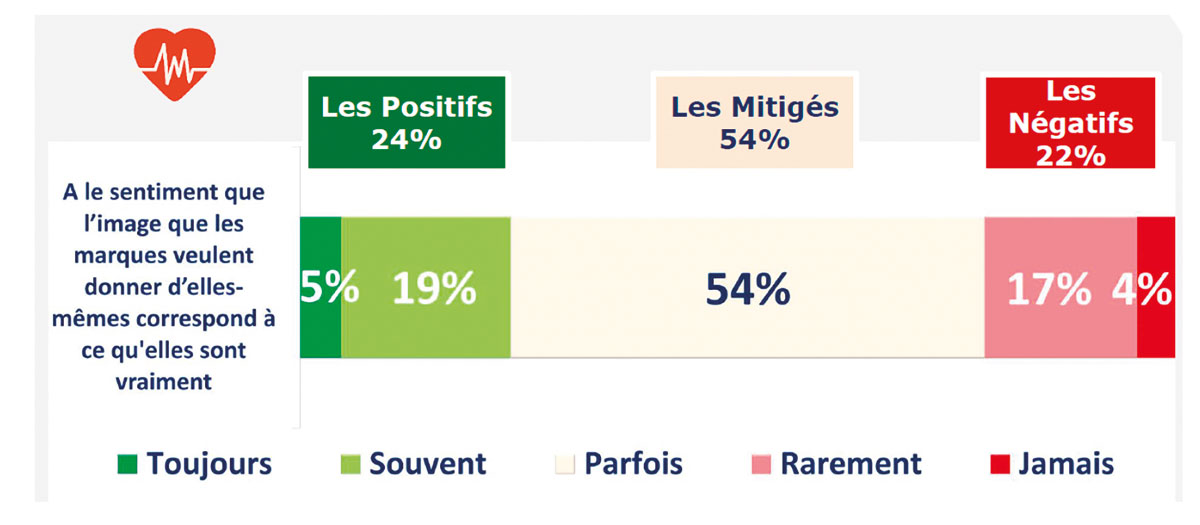 Beyond just the level of positive perception, the most significant result lies in the difficulty, for a large majority of those questioned, to establish a clear correspondence between what brands want to show and what they are actually perceived to be.
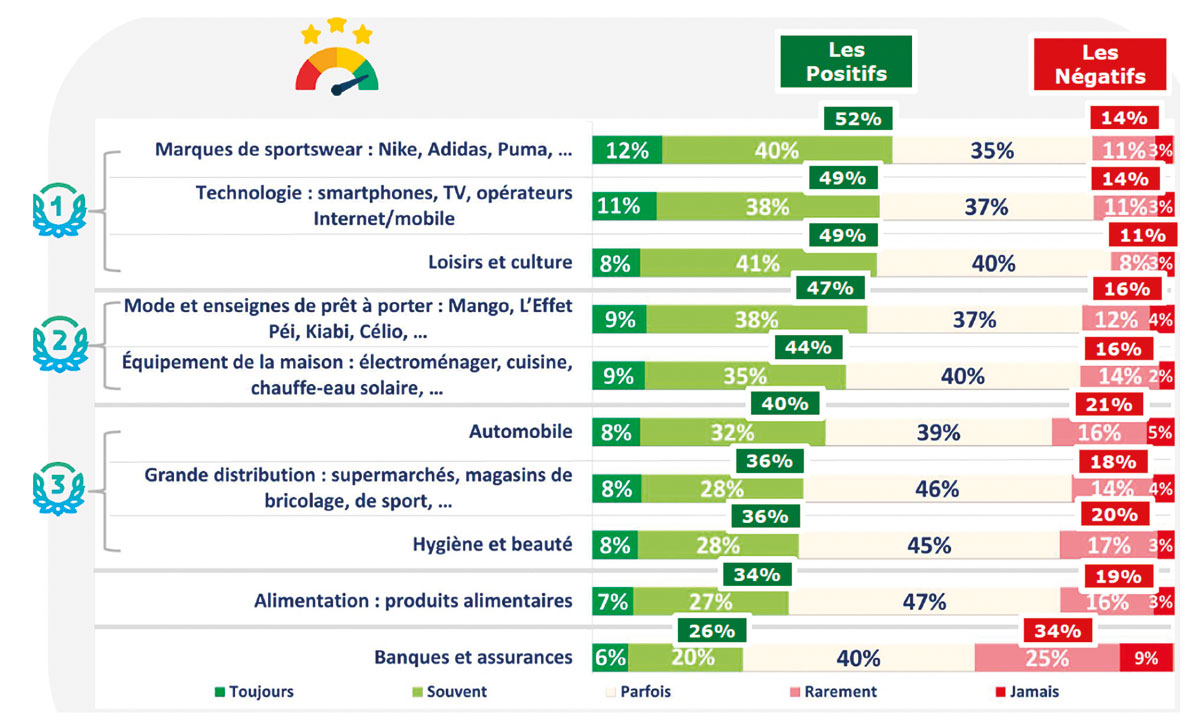
The study also notes generational differences. 18-29 year olds are particularly more favorable than those over 45 in the hygiene and beauty sectors, of automobile, leisure and culture.
Brand repositioning : AI at the service of experience
Does repositioning imply changing everything ? “Not necessarily”, responds François Mandroux who proposes the Sprint Marque approach as a solution.

A gap observed ? The diagnosis of the MOP makes it possible to adapt the strategic response : “When a brand is “aligned”, the challenge is to preserve and if possible strengthen its relevance. When she is “underrevealed”, it’s about making its value more visible and more readable. When she is in a situation of “over-promise”, the priority is to bring the promise closer to the real experience. When it is weakened, the question becomes fundamental : what credible reason does the market still have to choose this brand ? Today, the challenge for brands is therefore not simply to increase or modernize their communication, but to compare in depth their desired positioning with their positioning actually perceived by the market. »
A quick response
The Brand Sprint concentrates strategic work in one day involving a senior consultant, a dedicated methodology and an artificial intelligence co-pilot specialized in branding. The analysis focuses in particular on the context and the central challenge, segmentation and personas, the competitive environment, brand analysis, its positioning, its brand platform, the customer journey, the means, as well as strategic priorities and projections. The distinctive character of the approach therefore does not only lie in its speed, but also in its logic supported by AI.