

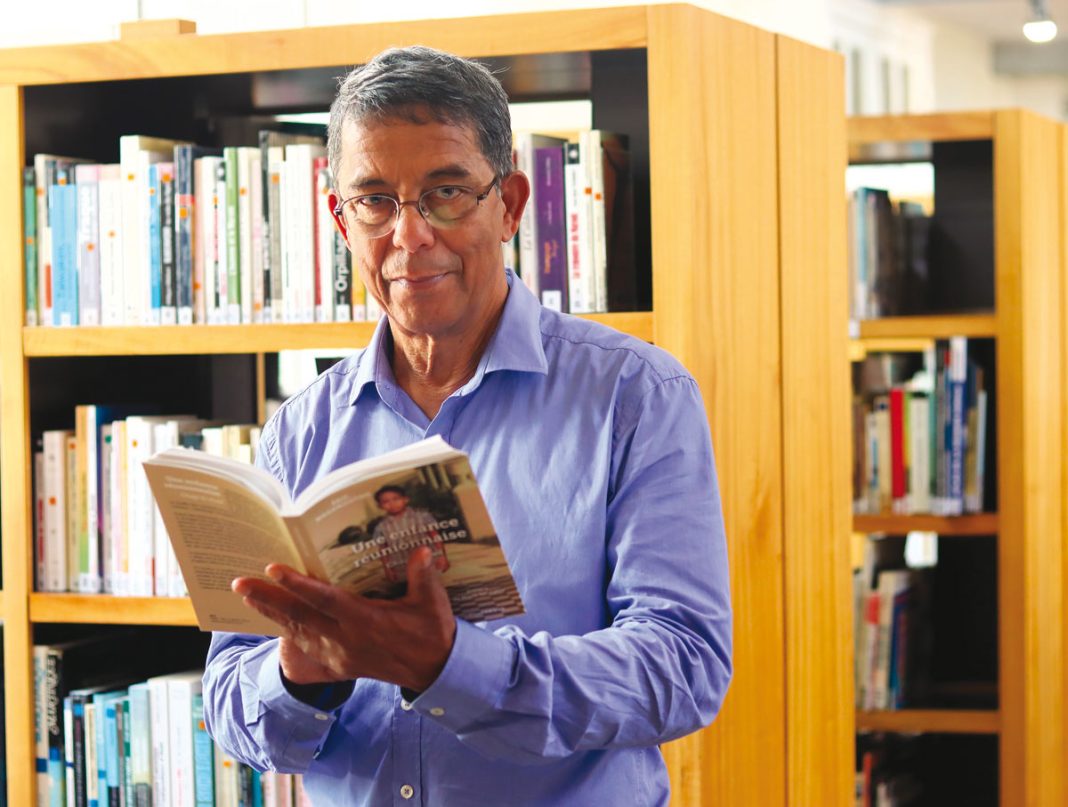

Can we escape a completely traced destiny ? In his latest autobiographical work, ÉRIC MYMOOTOOO, 69 ans, who was notably president of the CCI Réunion, brought, supporting evidence, a positive answer to this question. This work both intimate and universal was presented on April 11 at the departmental library, highly symbolic place for the author. It was here that the child he was had the trigger that would change his destiny : the discovery of cinema, then books, as doors of escape and transformation.
A Reunion childhood – Chap lo mail is a dive into a childhood marked by poverty, social discrimination and the weight of a colonial past still present in Reunionese society in the 1960s and 1970s. Éric Magamootoo describes with great accuracy life in the slums of Saint-Denis, where families from modest origins struggle daily to survive. With his childish gaze, he delivers poignant scenes : difficulty feeding, school humiliations, anxiety about the future, but also the moments of complicity and simple happiness that punctuate childhood despite everything. Young Eric faces a harsh upbringing, where parental love often comes through strict demands and relentless discipline. This training, bordering on military, leaves little room for dreams and personal ambitions. But Eric refuses to accept this ready-made destiny. He discovered very early the power of the imagination, knowledge and culture as means of escape. A professor from Bourbon College, seeing in him a promising student, one day advises him to go see the film Zazie in the metro. This experience is a trigger : he understands that other worlds exist, that other paths are possible. The Reunionese expression “chap lo mail” sums up this desire to escape the cracks of a predetermined destiny.. Since then, reading becomes his refuge and his salvation. He devours books, which offer him an opening to the world and make him want to find his place there.
A striking portrait of Reunion society
The author does not just tell his own story : it also paints a striking portrait of Reunionese society at the time.. It depicts an island still marked by the history of slavery and indentured labor., where racial and social inequalities are pervasive. Poor workers live in unsanitary huts, while administration and teaching remain largely dominated by figures from the metropolis. The school, supposed to be a springboard towards social ascension, is in reality a place of humiliation for children from working classes. Teaching is often brutal, imbued with a European-centric vision that disdains Creole culture and regional languages. However, in these difficulties, the child that was Éric Magamootoo will learn to transform his anger and frustration into unfailing determination. “My story is sometimes hard, but it is never a plea of victimization. I give in neither to hatred nor to resentment. On the contrary, I wanted to deliver a profound testimony on the ability of each person to defy their destiny, to overcome obstacles and find your own way”, confides the author. Mission accomplished for Éric Magamootoo : his book strongly reminds us that 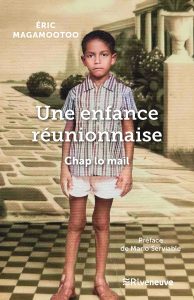 education and culture are the most powerful engines of emancipation.
A childhood
Reunionese
–Chap lo mail
ÉRIC MYMOOTOOO,
preface by Mario
Helpful. Editions Riveneuve.