

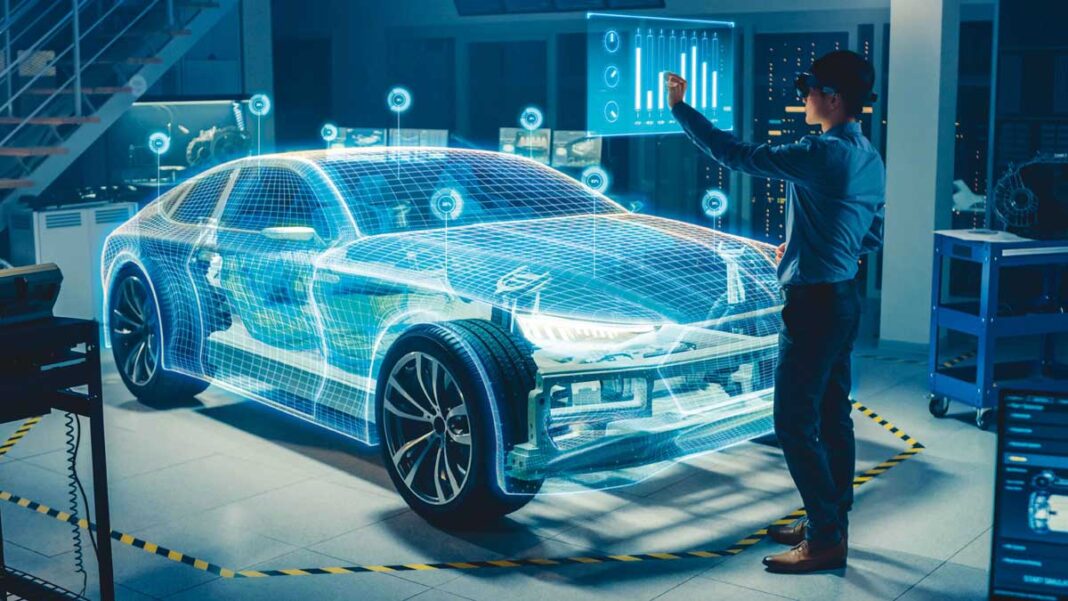

Mobility is now conceived in a multimodal and connected way, making software — or software — the vector of a profound transformation of the automotive sector towards servicing. Stakeholders must make important decisions regarding the technologies to be installed in new vehicles : should we make a pact with the technology giants, or become a software company yourself ?
The future of automobiles will depend on software : with the connectivity revolution — C-V2X or “Cellular Vehicle-to-Everything” —, the partitions are blown. Rampant softwarization is creating new players and adding uncertainty to the sector. Faced with this announced revolution, many historical references such as Volkswagen, Renault, Mercedes-Benz have decided to take the plunge into the digital revolution.
The Chinese automotive sector is becoming a software economy : for China, 2021 was the year of the convergence of software and automobiles. Historical manufacturers like SAIC or Geely accumulate partnerships with tech giants such as Baidu, Tencent, Alibaba and Foxconn to become true providers of everyday services.
The automotive sector, builder of the cities of tomorrow : Toyota, the Japanese giant recruited a former Google employee in 2016, James Kuffner to develop an open OS called “Arene”, which serves as the base of its city, « Woven City », inaugurated mid-February 2021. Technologies such as autonomy, robotics, personal mobility, smart homes and AI can thus be developed and tested in a real environment.
“Car manufacturers want to move beyond their restricted framework of vehicle suppliers. They want to collect as much data as possible and make the most of it. Their stated goal is to sell, in the form of a subscription, maximum services, even going to imagine the cities of tomorrow” summarizes Guillaume Rio, technological trends manager at Echangeur BNP Paribas Personal Finance.