


The day after the presentation by the President of the Republic of the “France 2030” Investment Plan, the Strategic Committee of the Wood Industry expresses its satisfaction. The French forest-timber sector feels reinforced in its strategic role of producing a renewable material essential to the industrial development of the Nation.
An envelope of 500 million euros will be specifically dedicated to the consolidation of the timber sector, to which must be added the cross-cutting financing of the Plan (industrial and capital – BPI). This investment constitutes an important lever for the sector's contribution to the carbon neutrality objective that France has set for 2050.. This recognition also concretizes the collective work carried out by the wood industry for several years. The sector is already engaged in numerous innovation processes : research on tree species adapted to climate change, decarbonization of buildings, robotization and increase in the capacities of industrial equipment, production of technical wood, living environment markets, progression of biomass in the decarbonization of the energy mix, green chemistry, green hydrogen, etc. The Wood Sector Strategic Committee had assessed the investment needs for industries and companies in the wood materials and furniture sector at 1,2 billion euros per year for the next five years (including 820 million per year for the construction timber market alone). To these industrial investments, Added to this is the need for 200 million euros per year to support forest renewal. “France 2030 presents itself as a new major step in the structuring of these investments” judges the Strategic Committee of the Wood Industry. For the only outlet for wood in the building, the potential for additional added value creation by 2030 exceeds three billion euros. It is for this reason that the sector committed itself last February to supporting the ambition carried by the Government with the future Environmental Regulations for buildings. – dite RE2020 – by launching the “Ambition Bois 2030 Plan”. Another promising consumer trend : health and well-being. For wood, this represents significant potential for development and innovation, particularly with regard to the living environment (health, luxe, eating, hygiene…) and wood-based packaging.
500 million euros for what to do ?
The announced envelope will contribute to the creation of new production units to strengthen the national sovereignty of the sector and reduce imports., by developing the capabilities of future leading French players for specific technical products such as glued laminated timber, the back glued, them CLT, furniture-arrangement, industrial carpentry, packaging and logistics… It will facilitate the development and implementation on an industrial scale of innovative technological processes to respond to future markets with high added value. (green chemistry, fibers, technical wood…). It will also contribute to investment in existing production and prefabrication units for wooden structural elements to increase and modernize their production capacities and make them more flexible.. The same goes for the valorization of wood processing co-products and the production of sustainable heat., competitiveness factors for the processing and drying of wood products. Finally, it will support the continued renewal of French forests to maintain their vitality, their productivity and their capacity to protect biodiversity.
A strategic sector of sustainable development
With a total of nearly 393,000 direct and indirect jobs, or 12,5% of manufacturing industry jobs, the forest-timber sector is strategic. The sector generates around 60 billion euros in turnover each year., including 26 billion of added value. Additional advantage : companies in the forest-timber sector are located throughout France. Photosynthesis in the French forest generates an annual production of 85 million m³ of wood per year. It is the only raw materials market (with primary agricultural production) where France can guarantee a lasting “base” of national independence for its supplies : 63% of French timber requirements are already produced and harvested in French forests. The French forest, currently the third in the EU, has experienced strong growth over the last thirty years, going from 1,8 billion m3 on foot in 1985 to 2,8 billion m3 today, an increase of more than 50%.
THE REUNION FOREST IN 2030
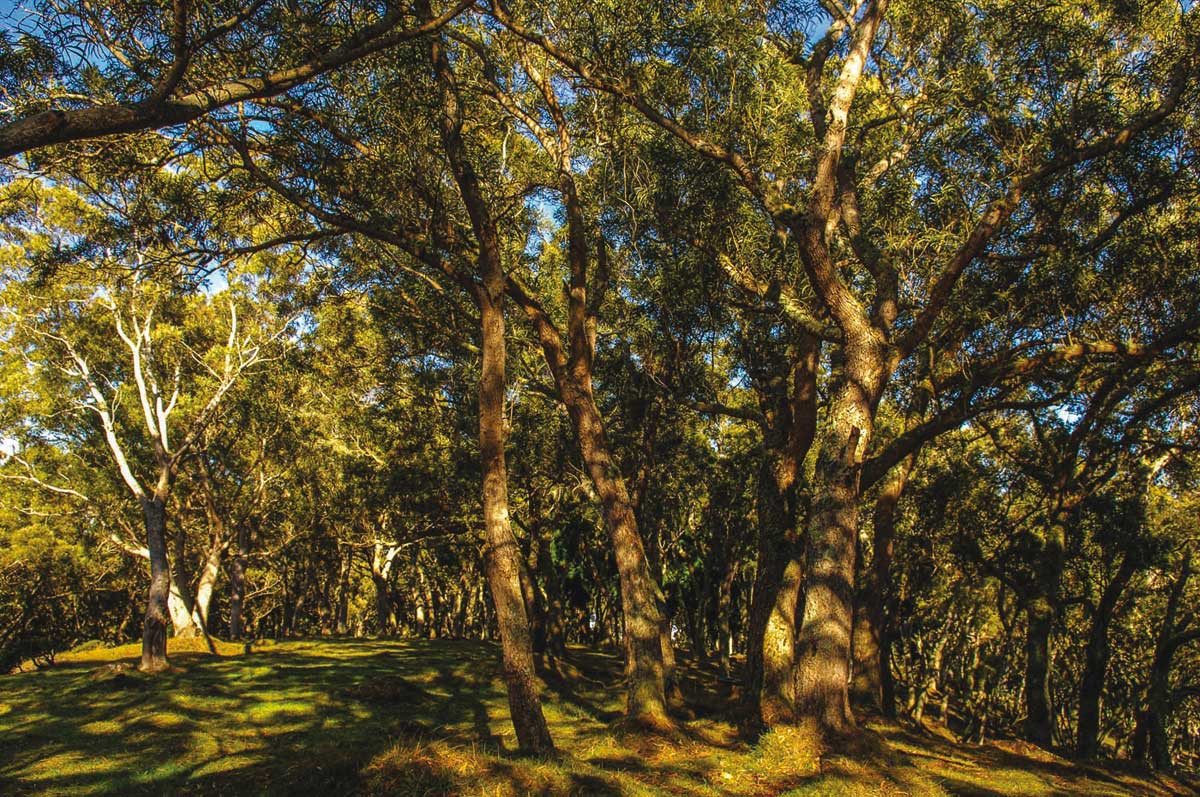
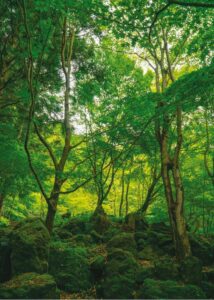 The France 2030 investment plan should mainly concern overseas territories through the exploration of the seabed. However, wood energy is also planned in Reunion. The Reunion forest is the subject of an orientation plan for the same deadline : the regional forest and wood program 2020-2030.
A travers ses propositions d’actions, the Regional Forest and Wood Program establishes a framework bringing together the findings and reflections that have been going through this sector for several years now. The local wood processing sector is in crisis. On the protection of the forest and its natural environments and on the promotion of forest production, mainly through sustainable building, the program recalls that “maintaining forest cover, preserve natural resources, strengthen the attraction of attendance” must be consistent with the desire to “enhance economic potential and “develop regional talents” in this area. It thus plans to limit forest production “to areas already cultivated, to secondary wastelands, to abandoned spaces », which could still represent “a few thousand additional hectares”. “In a necessarily open market, since it is necessary to supply the island with materials which are not sufficiently available locally, competition is even tougher than logistics costs, scale costs and employment costs are much higher than the global average. In such a context, only strategies of excellence and differentiation can work. Concerning non-relocatable services, mainly in the construction sector, the quality, climate adaptation and environmental performance must take precedence in order to guarantee the sustainability of achievements. »
Acacia as energy wood
The program envisages the market for wood energy. Lack of resources in this area, wood imported from the USA will be part of the renewable energy mix which should enable Reunion, at the end of next year, to do without fossil fuels entirely to produce electricity. This local wood energy sector would give “exotic species (mainly acacia) a market value to supply thermoelectric power stations. » The program also recommends an “agro-forestry model” promoting forest agricultural production. (vanilla, Honey, medicinal plants) “which make Réunion famous and fit perfectly into the forest”.
Frank Martin