

Democratic deficit
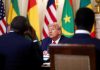
Already singled out for its difficulties in convincing the European Union – and now Great Britain – of the transparency of its financial sector, Mauritius sees itself demoted by the V-Dem Institute, a Swedish institute at the University of Gothenburg that studies democratic systems around the world. In the latest V-Dem ranking, the sister island enters the category of “autocracies” (autocratising countries). The institute believes that Mauritian democracy functions poorly on a daily basis, with a poorly respected political opposition in parliament and anti-corruption bodies without independence.
Concerning its inclusion on the FATF gray list, the European Union Financial Action Task Force which fights against money laundering, Maurice still has nine months, until February 2022, to present a file proving that European suspicions are no longer justified.
Maurice, island of the rich
Around 4,400 millionaires (and dollars) live in Mauritius and the island is the richest African country per capita, according to the Africa Wealth Report 2021. This report is established annually by AfrAsia Bank and the South African consultancy NewWorldWealth.. South Africa, Egypt, the Nigerian, Morocco and Kenya are the countries where the added individual wealth is the greatest.
Security and high standard of living are the main reasons why wealthy investors choose to settle in Mauritius”, comments an AfrAsia Bank analyst.
Sun sells his Maldives hotel
The Sun group has decided to sell the Kanuhura hotel it owns in the Maldives, for an amount of 41,$ 5 million. The buyer is a Singaporean group, Hotel Properties Ltd. Made up of 80 villas, Kanuhura reopened its doors last November, at the same time as the archipelago reopened its borders. But the tourists are not really there : attendance in the Maldives fell by 40% in January-February, compared to 2019. The operation will allow Sun to reduce its debt. Heavily impacted by the crisis, the Mauritian group has four establishments in the country : Amber, le Long Beach, the Pirogue and the Sugar Beach.
Currencies are missing
The Mauritian rupee has lost its value since the start of the financial crisis : -16% compared to the euro, -20% against the dollar. The drying up of tourism revenue in foreign currencies due to the health crisis, but also the slowdown in foreign investments are the main causes of this weakening. The Mauritian central bank supports local banks by drawing on its reserves, at the risk of threatening its ability to repay the national debt to foreign donors. Pressure is therefore mounting on the government to open the island's borders and restore tourist flows., as did the Seychelles whose currency regained its pre-crisis parity with the dollar.
Plastic packaging : cacophony in the shelves
The law banning single-use plastic packaging came into force on April 15, causing a certain cacophony in Mauritian trade. Distributors do not complain about the lack of precision of the texts. According to the Mauritian press, some large stores preferred to remove products from the shelves rather than incur a fine. Local producers who no longer have the right to use non-recyclable plastic packaging denounce the fact that imported products continue to enter the market in the same packaging. In response, the Ministry of the Environment emphasizes that a consultation had been organized before the entry into force of the law to ensure that alternative products were available on the market at a reasonable price. The government has also accepted a moratorium until January 14, 2022 for the ban on certain categories of plastic packaging for food products. (goblets, bowls, yogurt pots…).