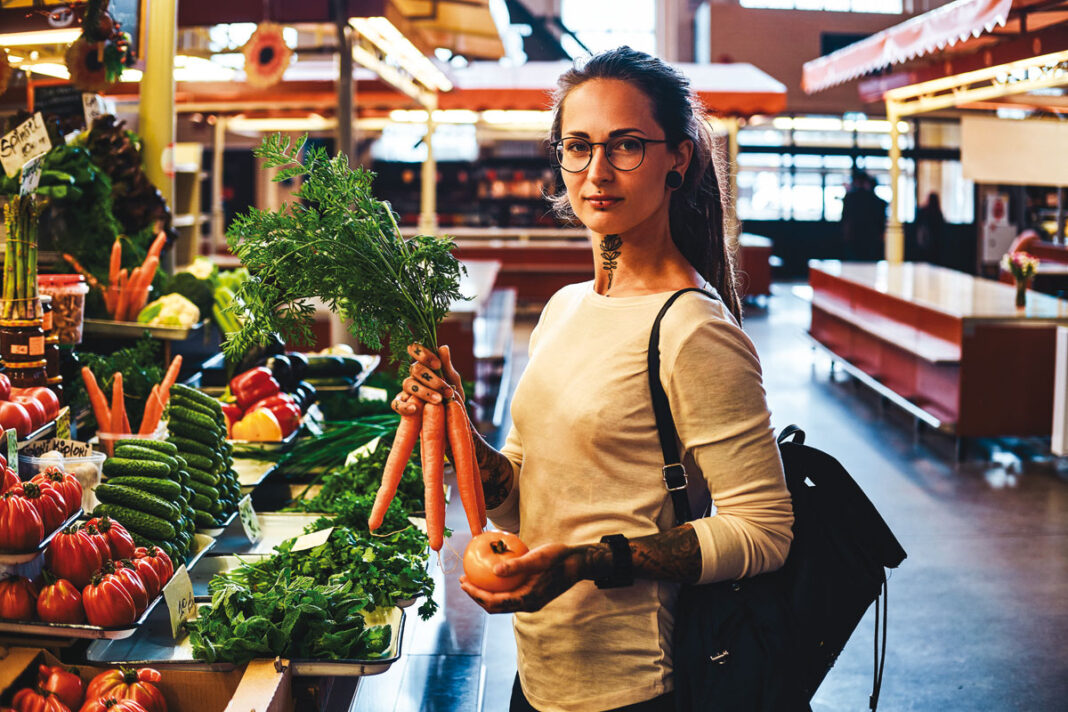
Put in difficulty by inflation, the circuit of specialized organic stores in mainland France has seen nearly 200 closures and a drop in attendance. More, once this observation is made, how to determine the deeper reasons which explain this disenchantment of the French ? Response with a study from Attitudes and Society.
Attitudes and Society surveyed a representative sample of the French population of 1,326 people (selected according to the quota method – source INSEE) on their perception of specialized organic stores via a series of indicators : prix, originality, difference, approval, quality. The full results of this study were made public during the Natexpo Show, which took place from October 22 to 24. More than two in five French people continue to frequent organic stores : this is the first lesson of the study ; the French have gotten into the habit of going to organic stores, sometimes very regularly (21% go there at least twice a month, including 9% at least once a week). However, inflation has forced them to change routes to do their shopping : 14% of them admit to going there less often than a year ago.
The legitimacy of organic stores no longer needs to be demonstrated
Consumers believe they can find products there that are not available elsewhere (78 %). They also appreciate their specific atmosphere (76 %), the choice offered (74 %), the pleasant layout of the space and the advice provided (73 %), as well as the quality of the products (61 %). But the specialized organic store suffers from a real image deficit on prices : it is considered too expensive by 85% of those questioned. otherwise, it remains difficult to find for almost one in two people (47 %), and the same proportion say they have difficulty finding their way around.
Local products and clarification of labels
To enhance their image and the added value provided, organic brands will have to work on two levers. First lever : local products. Nearly eight out of ten French people consider that consuming local products preserves the planet more than buying organic products.. So they tend to favor them lately (73 %), especially since they are perceived as less expensive (69 %). Second levier : the clarification of labels. Nearly eight out of ten French people think there are too many labels. And even if they take into account those relating to quality (74 %), they don't always know what they correspond to. for example, 75% believe that food products from High Environmental Value sectors are grown without synthetic pesticides or chemical fertilizers.
THE BAROBIO AND THE OMNIBIO OF ATTITUDES AND SOCIETY
 Attitudes et Société carries out all types of quantitative and qualitative studies in order to support its clients in implementing their marketing strategy. Its BaroBio is a barometric study carried out each year among a representative sample of consumers active on the specialized organic circuit. (± 500 consumers). This study is marketed as a multi-subscription, and each subscriber can also test their brand on a series of indicators. To construct this sample, Attitudes and Society, questions a broader base, representative of the French population. This is also what gave him the idea of carrying out a study on the perception of organic stores.. The OmniBio is the first Omnibus study dedicated to the specialized organic circuit. It is carried out online, twice a year, to answer the various questions asked by several subscribers sharing the target of organic channel consumers.