

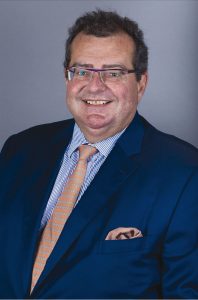
The auto entrepreneur, thanks to simplified procedures and a lighter tax regime, attracts a very diverse audience. But what really happens to income from an activity under this status? ? Pascal Ferron, president of Walter France and founder of the site dedicated to self-employed MonEntrepriz, deciphers the lessons from the latest INSEE report on the income of the self-employed.
Hors agriculture, the number of non-employees increased by 72% between 2008 and 2022, demonstrating the French enthusiasm for entrepreneurship, especially when it is exercised independently, without having employees to supervise. And almost half of self-employed people were active microentrepreneurs in 2022, reaching the number of 1,8 million. The success of this simplified status grows from year to year, despite the successive claw blows that scratch it. The average income of an active microentrepreneur amounts to €670 per month in 2022, up slightly compared to previous years (+43,7% since 2013 in constant euros). This average, however, hides strong sectoral and individual disparities and above all takes into account those who are very close to inactivity., at least temporary. In certain sectors, average monthly income exceeds €900, especially in construction (920 €), real estate activities or even engineering and financial services (more than €1,000). Conversely, microentrepreneurs active in home delivery, artistic services or teaching generally earn less than €500 per month from their activity. As a reminder, the status of microentrepreneurs is capped by law at €72,600 excluding tax for the provision of services and at €176,200 excluding tax for commercial activities, allowing a number of self-employed people who carry out their activity full-time to be remunerated quite adequately. The project to lower these thresholds which was envisaged at the start of the year is for the moment, very fortunately, postponed indefinitely.

 A status suitable for beginnings, but not for all ambitions
Data analysis highlights differentiated use of microentrepreneur status. If it constitutes an excellent springboard towards entrepreneurship for young people, active workers undergoing retraining or retirees in partial activity, it shows its limits as soon as the activity becomes professional. Beyond a certain business volume, turnover thresholds and flat-rate taxation can become counterproductive. It becomes essential in this situation to carry out strategic reflection on the change of status, particularly towards the classic individual enterprise or the creation of companies (EURL, SASU), in order to optimize both taxation and income.
The status of a stage and not an end
In 2022, three out of ten microentrepreneurs are multi-active, which demonstrates that the status is often used as an income supplement. However, in certain sectors with low initial investment (like digital services or consulting), stable and sustainable income can be achieved. The status of microentrepreneur remains a formidable gateway to independent activity, but it must be considered as a stage and not an end, particularly for those who aim to make a full living from their activity.
From full time to occasional activity
The INSEE report reveals a very high level of inequality among microentrepreneurs : the 10% of the best paid microentrepreneurs earn more than €1,750 per month, while the lowest paid 10% do not exceed €20. This extreme dispersion is explained by the diversity of profiles. Indeed, many self-employed people carry out their activity in addition to salaried employment, to be able to earn income from their passion ; they may also be students who work part-time, retirees who thus supplement the weakness of their pension or employees who monetize part of their free time thanks to a passion or springboard activity... Many self-employed people thus work very part-time, or even more than occasional or one-off.
The 10% best paid
The average remuneration is therefore not very significant., in any case difficult to extrapolate or even compare to the level of employee remuneration. Among the 10% of self-employed people who earn the best, some work full time. They opted for this status for its administrative simplicity and because they chose to work alone. They make the most of the authorized turnover thresholds. In this case, they can reach annual remuneration of €50,000 to €65,000 for extreme and fairly technical cases and are gradually moving towards exceeding the threshold.

Education and culture, dynamic sectors, but precarious
Certain sectors concentrate a large number of microentrepreneurs without generating significant income. In teaching, For example, median income is €350 per month. In the arts and entertainment, a significant proportion of assets receive less than €500 per month. These fields often attract passionate professionals or those in retraining, who carry out their activity alongside another job.