
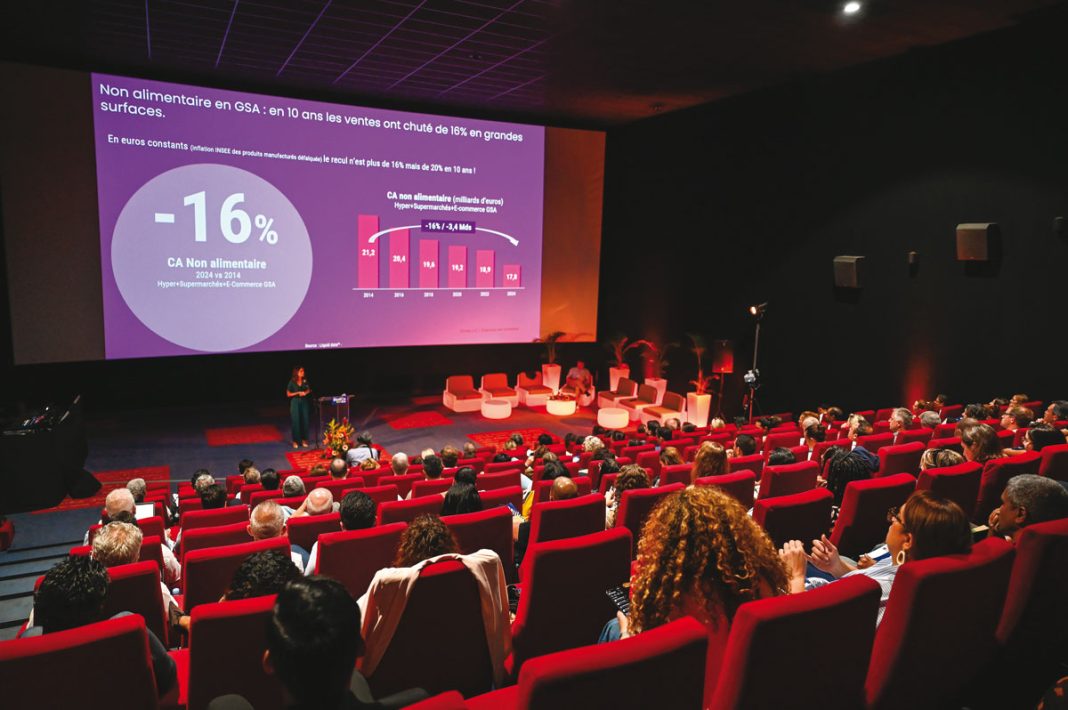

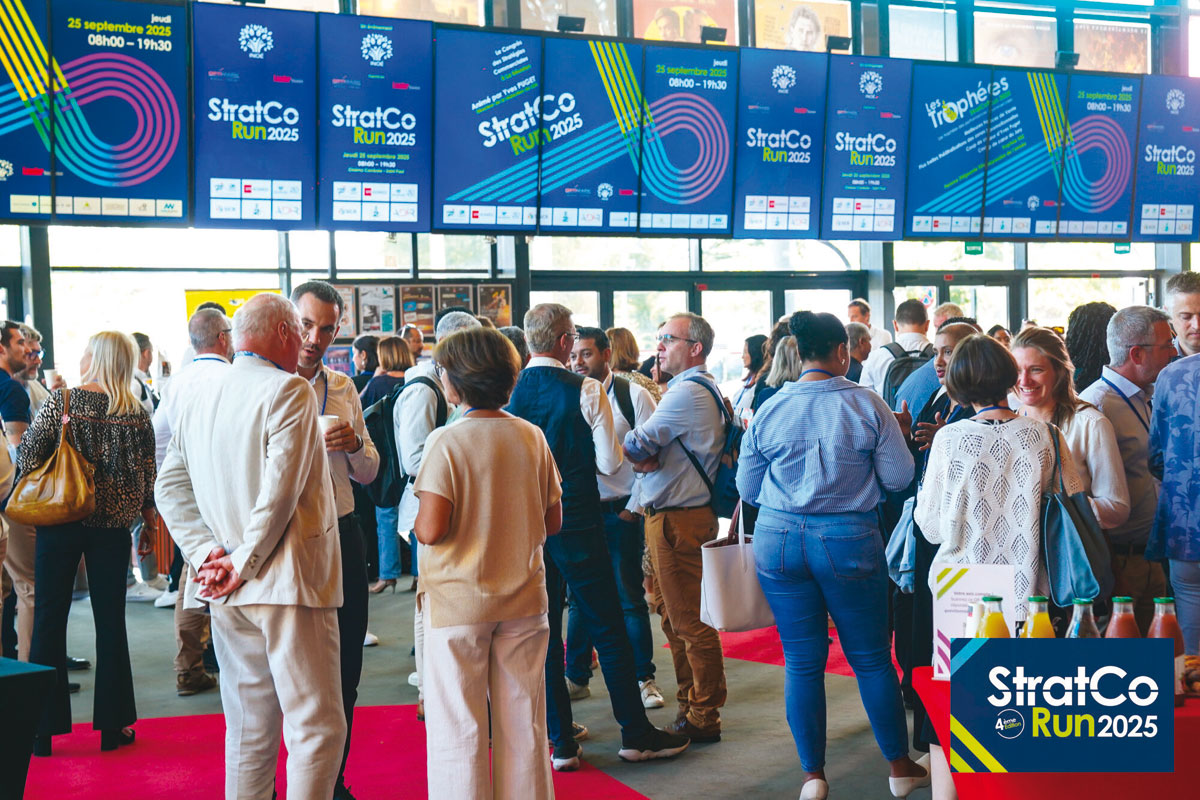
The title of Emily Mayer’s conference, director of studies at Circana France (“Decoding yesterday to better prepare tomorrow, challenges and prospects for Reunion trade”) cannot be better suited to qualify StratCo Run 2025 as a whole. This fourth edition of the congress was once again sold out on September 25 in Saint-Paul.. Even more than in previous years, it has shown its relevance in bringing together entrepreneurs from commerce and industry in an atmosphere that is both thoughtful and friendly to envisage the future. Which direction to follow indeed ? StratCo Run 2025 helped answer this question thanks to Émily Mayer, which placed the year 2025 in the course of successive crises and societal developments which are transforming ways of consuming and doing business.
From yesterday to today
2016 : first year of deconsumption.
2017 : drop in volumes in GSA, quality concerns (success of the Yuka app), price war and promotions.
2018 : fragmentation and hybridization of consumption with the emergence of other circuits.
2019 : rise of ecology, from the bio, responsible consumption.
2020 : the pandemic, the end of confinement and the explosion of volumes until the ebb during 2021.
2022 et 2023 : the price explosion (+6% in 2022, +13% in 2023).
2024 : disinflation, but volumes still down.
2025 : improvement of the situation.
Large distribution in question
In 2025, the hypermarket-supermarket pair remains dominant in the world of commerce, but significantly less than ten years ago (from three quarters to two thirds). Non-food turnover fell by 16% over ten years. Large-scale distribution has tightened its PGC-FLS* offer on solid food.
Sales : the “pluses” and the “minuses”
In decline : Milk, styling products, razor blades (many men no longer shave), makeup, spirits, red wine. Rising : beer, non-alcoholic drinks, less sugary drinks, plant, organic (turnover multiplied by 2,4 in ten years), le snacking.
The demographic impact
The population is aging, birth rate declines. The number of one-person households will reach 37% in mainland France in 2025. Estimated in 2030 : 42 %. The share of those aged 65 and over is 22% (11% of French people are between 65 and 75 years old). Consumption is affected. Incontinence products : +50% in ten years. Baby diapers -18%. Baby foods : -23 %. In the meeting, in 2050, more than a third of Reunion Islanders will be 50 and over.

Mistakes to avoid
• Reduction of supply and choice on the shelves (this is not a consumer demand).
• Complex and poorly executed promotions (consumers do not feel like they are saving money).
• The innovation gap (innovation stimulates markets and creates new ones).
• Deterioration of the in-store customer experience.
Solutions to support the recovery
• Price accessibility : it remains the key point.
• The affinity of the offer : the single national assortment no longer makes sense. We must adapt the offer to the demographics, to the size of households, to the territories, to the neighborhoods.
• Limit stock shortages (1,5 billion euros in losses estimated in the first half of 2025).
• Highlight promising products : sports nutrition, the responsible offer, le snacking, all ready, products that are “a hit” on social networks.
• Merchandising and category work must make life easier for customers : better visibility of innovations, better execution with sales forces, shopping by recipes, e-commerce, home delivery, etc.
* PGC-PLS : consumer products – self-service fresh produce.