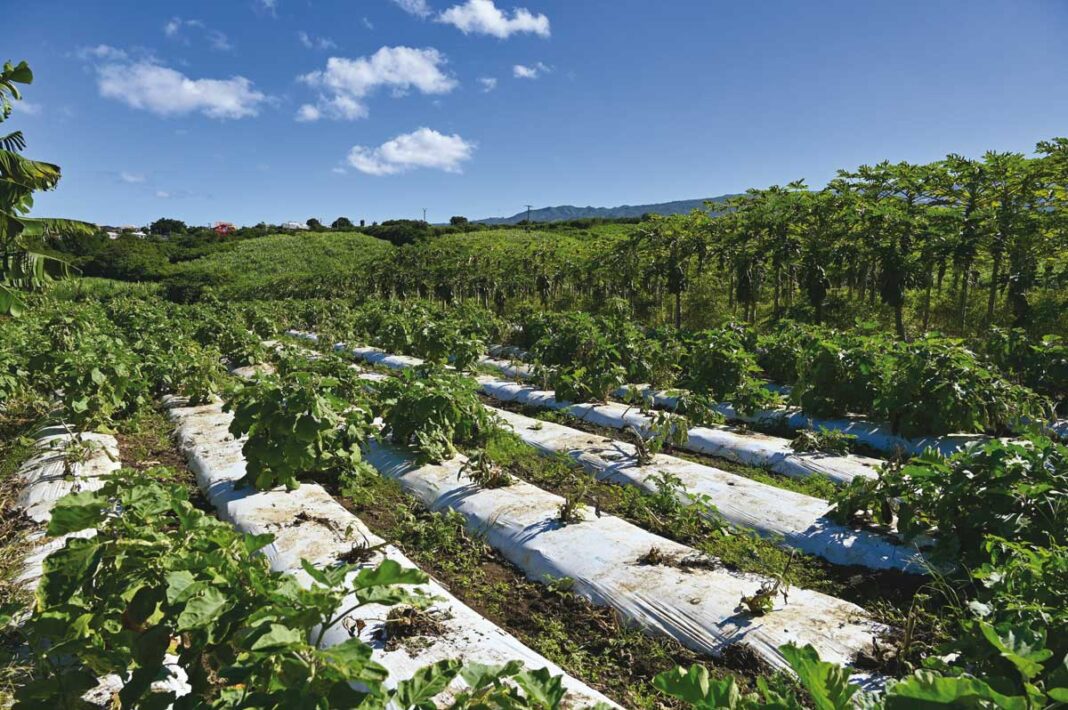


The 2020 agricultural census has just produced its first results. It shows in particular that Reunion Island has lost 4,000 hectares of cultivated areas (-10%) in ten years. In 2020, the agricultural area used (OR) of the island extended over 38,650 hectares, or 15% of the territory. The decline is especially noted in sugar cane, which lost 3,000 hectares in a decade. But cane fields still cover 55% of the UAA. The number of agricultural holdings has fallen by 18% in ten years. 6,250 were counted in 2020. Micro-farms and small farms saw their numbers drop by 23% and 17% respectively., but they still largely remain the majority model (87% you total). Over the period studied, many of them have expanded : their average surface area increased from 5,6 to 6,2 hectares. In 2020, 37% of farms were specialized in sugar cane, 12% in breeding, 31% in fruits and vegetables and 17% combined several crops and livestock. Many sugarcane planters also practice market gardening and horticulture. The number of horticultural and market gardening farms is falling more slowly, of 10%, while those that produce fruit progress. The reduction in the number of livestock farms is partially offset by the increase in the average livestock they house. Agricultural employment has also fallen by 12% in ten years.. In 2020, Reunion farms employed more than 11,500 people full-time, overwhelmingly of family origin, and 6,100 seasonal or occasional workers. Outside the cane and despite the decline of the surfaces, Reunion agriculture has gained in productivity in recent years. The last annual report of Iédom thus reported a progression, value, of all fruit and vegetable production and livestock production between 2017 and 2020.
CULTIVATED AREAS HAVE FALLED BY 10% IN TEN YEARS