


Twenty-five years of observation, collection, processing and analysis of data and responses from respondents in hundreds of surveys, on the products, the markets, purchasing and consumption behavior... If someone is well placed to take an objective look at economic and commercial developments in Reunion, on that of mass distribution in particular, It’s Philippe Fabing, well-known face of the SAGIS Group. Philippe Fabing, group president, is also its director of studies. With this experience, he considers the Reunion market “almost unique in the world” due to its history and sociological characteristics. A paradoxical market which, although very diverse, includes certain historical food products which resist all developments and still retain the value of identity markers today. Behind the history and current activities of the SAGIS Group, Philippe Fabing brings up a portrait of Reunion, sometimes unexpected, from the perspective of its business and consumption habits.
The SAGIS company was founded in 1997 : a local polling institute, on a regional scale, Was it common at the time?, and still today, Is this a particularity compared to the metropolis? ?

Overseas, the case is not rare. Knowing that we are not just a research company. Studies and surveys represent around 40% of our activity – 45% are carried out in the field of customer relations and loyalty and around 15% in the field of data science., data management and data visualization. However, telephone and face-to-face surveys are, Effectively, the historical business of SAGIS. Our story begins in 1997 with the creation of the first company of the current group, one year after that of a local research company created under a Louis Harris franchise (which has since become a subsidiary of the Ipsos group), our main client at the start and for almost 20 years in the field of investigations. From 2018, the customer-supplier relationship model has gradually changed, to find its current form last year. And so it was very recently, that SAGIS can directly offer almost all of its study services to almost the entire local or foreign market.
What services do you offer today ?
In addition to studies, to develop a business in a micro-market like Reunion Island, either you create other things in the same place, either you will do the same thing elsewhere. We opted for the first solution. From 2007, we amplified, with the four current managing partners of the group, a significant diversification of our activities started in 2000, by starting customer relations services, with the development of a multi-channel call center. In 2007, we were also a pioneer in Reunion in the field of data science and algorithmic data processing. We carry out behavioral and value analyzes, thanks to the computing power and intelligence of the algorithms. This diversification of the company today results in three different companies. The historical society, SAGIS CRC, is the customer relations center and telephone survey area. The second company, Terrains & Statements, takes care of “outside the walls” : store statements, face-to-face surveys, mystery visits, product tests and shopper studies, in front of the linear… The third company, Business et Data Solutions, offers data science services, data processing and modeling, application development, allowing the information collected to be valued. With this mastery of algorithms, we are, For example, one of five companies in France capable of producing estimates of election results for election nights. More, daily, it is in the field of data marketing and loyalty that we most commonly use this know-how. All this gives, at the end of the day, a hybrid and balanced group, with a rather high technological level. This corporate identity and positioning, developed over time in the local context, you don't really find them nationally.
Do we investigate today as we did 25 years ago, and regarding marketing and distribution, Are we trying to know the same things? ?
On the form, there is technical evolution : to cite just one example, 25 years ago, for telephone surveys, we worked exclusively on landline numbers, today we mix fixed and mobile… Basically, I want to answer yes and no. Yes, because the fundamentals have not changed. So the notoriety, l’image, linear visibility, the analysis of strengths and weaknesses compared to competitors are immutable elements of information. However, I observe over these 25 years a gradual shift in demand towards more lighter and operational studies. Nowadays, For example, our customers' questions more often relate to promotional effectiveness or price elasticity.. These are questions to which our mastery of algorithms allows us to answer very carefully.. If we take the retail model of large food distribution, For example : a very important change that has taken place, from which we have not yet fully reaped all the fruits in Reunion, it is the implementation of loyalty programs in certain brands. These programs allow you to analyze large amounts of data, including “cash outflows”, on the customer journey, their purchasing behavior, etc. For a distributor or a brand, what are the three main areas of defense or value creation ? The product axis, the customer axis and the point of sale or distribution channel axis. With historical data, we help brands or suppliers to better develop these three areas of value.
You can give some examples ?
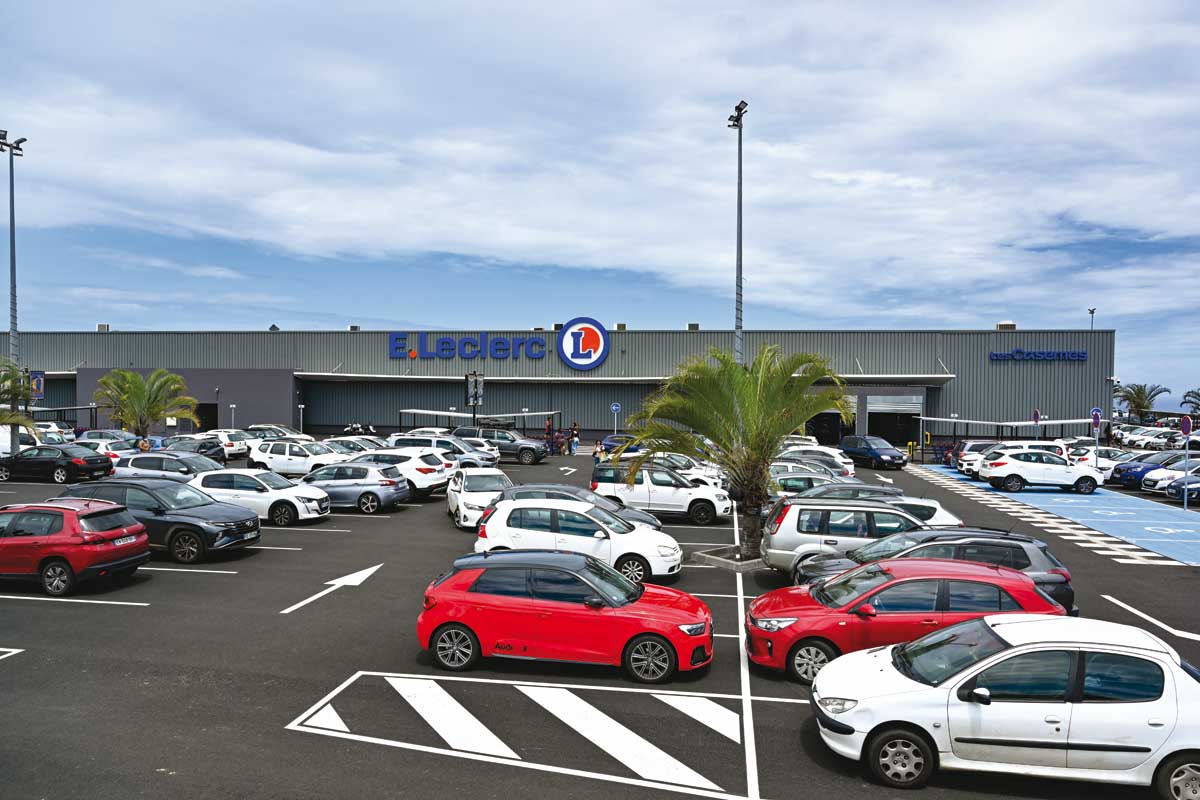
In the field of loyalty, but we have launched the Leclerc loyalty program : hundred people on the ground ! We audited and made recommendations for development, several years ago now, the Vindémia loyalty program. More recently, we participated in the renovation of the economic and strategic model of the loyalty program of another Reunion brand based on data collected in its loyalty program. We have also participated in the design of well-known loyalty programs in distribution circuits outside GMS and very recently, a fuel distribution operator has just entrusted us with the operational management of its program. Advanced analysis of receipts and product associations, we also made it on the national market, for a precursor of GMS e-commerce, Houra.fr, to refine the online cross-promotion strategy or for a specialized brand of the Mulliez group. These value development techniques through cross-selling are based on a fairly well-known “precursor” case in distribution.. It is through data analysis that the American brand Walmart and its supplier Procter&Gamble realized, Friday evening, of a joint sales peak of baby diapers and beers ! Walmart then developed sales through mobile merchandising to bring diapers and beers closer together., on Friday. ar around a rinoonic philosophy that has been introduced., in Great Britain, is also another known case in the history of data processing and switching of the promotional model in distribution.
You have been following the development of mass distribution for three decades : if you had to summarize its evolution in a few key words, which would you choose ?
First : professionalization of the market. And second : increased competitive intensity. 25 years ago, a largely leading brand was almost, on her own, rain and shine… A lot of change has happened, since, in Reunion distribution. The third thing to note, it's that, due to professionalization, the gaps between the best and the worst have narrowed considerably. The points of sale are generally all well maintained. And we observe a phenomenon of standardization and convergence in the positioning of brands, almost all positioned on the “middle market” – which may be understandable given the remote and cramped characteristics of the local market, combined with significantly less purchasing power than nationally. So that on the island, two segments are much less developed than nationally, or even absent. It’s “market entry” with hard discount : we do not have this category of stores, type Aldi, Lidl, super aggressive on prices. We also don't have the upper end of distribution, embodied for example by Monoprix. This is why the battle of the brands, to stand out, plays so much on prices and price image. Why, Also, for some, the development strategy is mainly achieved by mastering the different formats. 25 years ago, the supermarket format dominated.
The hyper format has since developed very strongly. We are now entering a new phase : the distribution segment watched very closely today by certain brands, it is that of proximity.
You see a decline in mass distribution ?
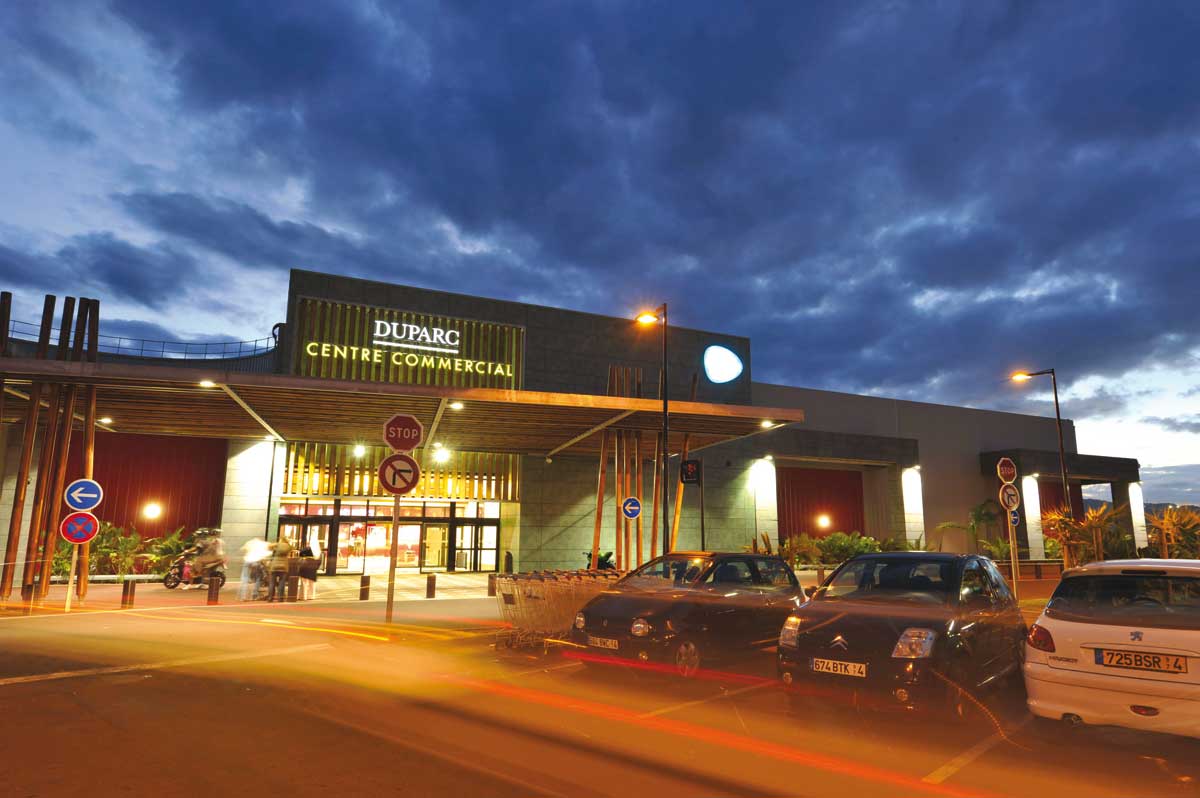
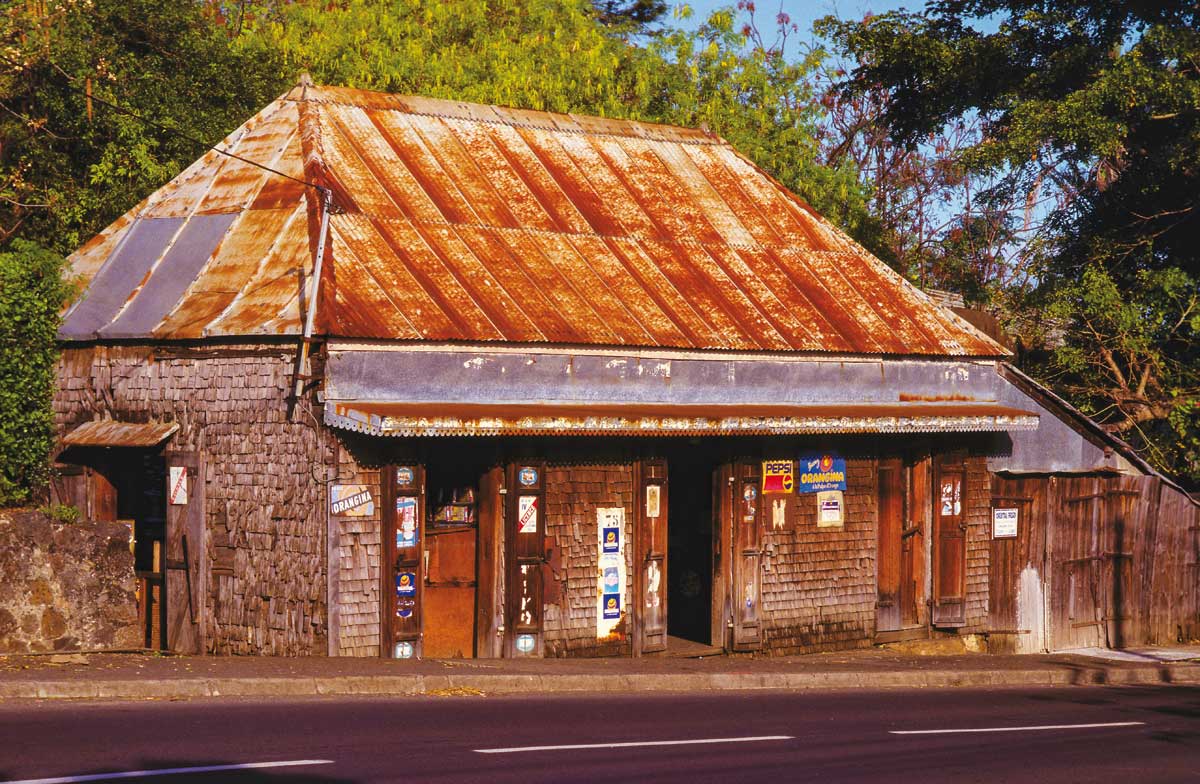
An INSEE study published in November 2020 shows that, contrary to what some may imagine, mass distribution is generally losing market share in Reunion. This form of distribution is still very dominant locally, more even than in mainland France and the Antilles. The fact remains that between 2006 and 2017, its market share fell from 81% to 77%. The history of trade in Réunion is, in some respects, the opposite of metropolitan history. In a city, traditional retail was built before the arrival of the big box store. In the meeting, none of that : we went directly, in the 90s, from the Chinese store to the supermarkets ; from an offer often close to shortage to “hyper-choice”. Here the specialized trade arrived after the supermarkets.
Take the wine merchants : they have developed in Reunion since the arrival of mass distribution, and not before. Another notable specificity of the Reunion market compared to the national market, this is the relative weakness of the GMS, and the particular model implemented in certain stores, on a strategic radius : that of fruits and vegetables. The share of the fairground market remains, here, much higher than what it is at the national level.
The counterpart of this evolution of brands, it is that of consumer behavior. How does this translate concretely?, in your field observations in stores for example ?
Reunion society has been undergoing strong and rapid change for several decades.. Globalization, demographic developments, explosion in household purchasing power since the 1990s : the drivers of change are powerful. In terms of food consumption, We often cite as an example of these consequences the gradual substitution of rice by bread., frozen pasta and fries in the diet. Just look at the success of fast food and pizza trucks.. And yet the bar truck and snacks have not disappeared, no more than the rice of the Reunionese diet. Other forms and other consumption habits are establishing themselves alongside the old ones. The relationship with cooking has evolved as in mainland France, we are looking for products that are quicker and easier to cook. But this shift does not prevent extremely strong cultural markers from remaining in Reunion Island.. I also note that, on the occasion of Covid and confinement, Reunion consumers are more oriented towards local stores to the detriment of destination stores. How will this trend continue with increases in fuel prices? ?
All retail brands consider local brands essential, but are these brands still popular with young people who are increasingly subject to international influences? ?
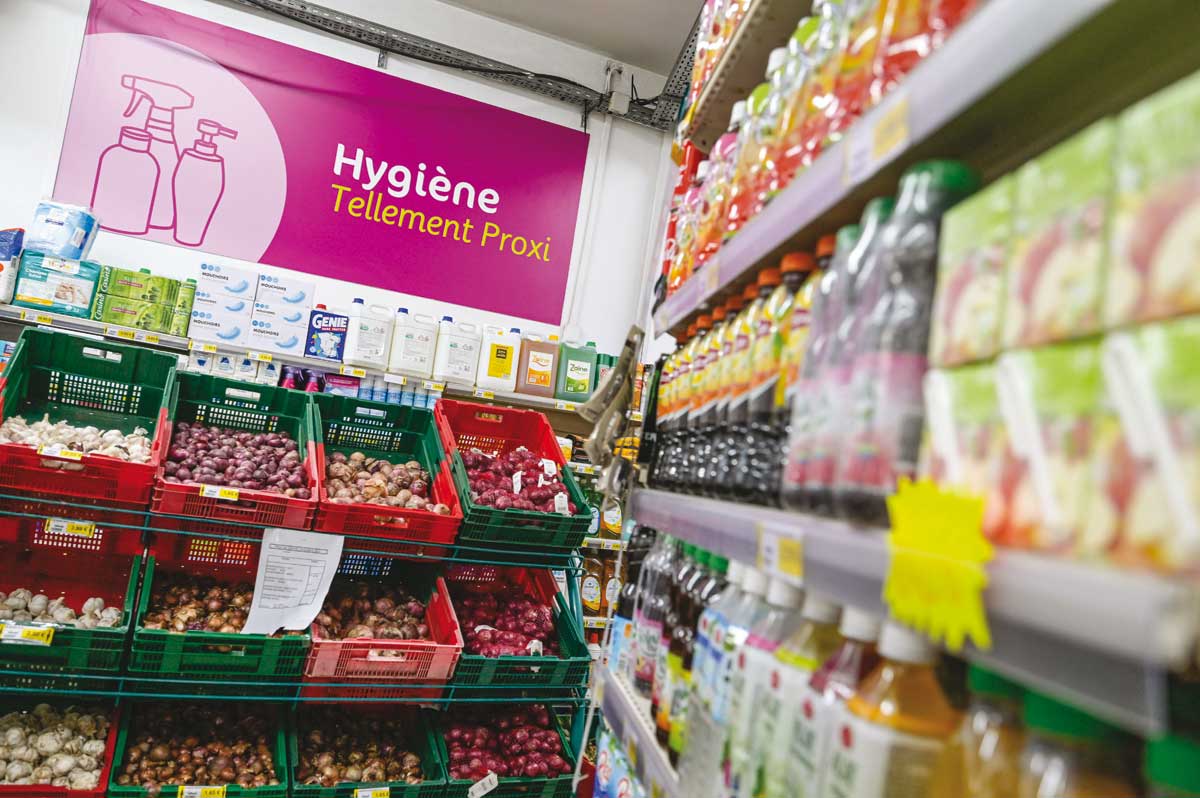
There are unexpected paradoxes in this matter… But on this question of local production, I will first say a word about what concerns us specifically at SAGIS. The customer relations sector (and this is also true for that of surveys) suffered a lot, for 10 years, relocations and competition from Mauritius and Madagascar. We could have surfed this wave of relocations through opportunism, but we have chosen to keep all our activities 100% local. For quality of service reasons. But also in view of the social and economic situation of Reunion, I consider it an obvious necessity, to favor local employment and therefore, for all actors, to concentrate their purchases as much as possible on local production. We have worked a lot on the issue of local production. When you talk about local production with Reunion consumers, They usually tell you two things, largely based on their perceptions in the field of food : the quality is good and the prices are accordingly, that is to say rather expensive. What you need to see though, it is that large-scale distribution has helped to put local production within the reach of as many people as possible in Reunion Island., while increasing competitive pressure from external products. for example, when we sought to understand how and why Reunionese curry could resist changing eating habits so well, that it was the response of people of a certain age ?
“Because now we can afford it ! Avant, the dear ones, we only ate it once a week ! » This is the accessibility to products made possible by mass distribution, combined with the very strong growth in purchasing power in the 1990s, which largely explains the dominant place taken by curry in homes, in frequency of consumption, even if this part is now on the back burner. On the Reunion market, you have identity markers of this type of remarkable strength, but you also have impressive leaders in some national brands, who resisted, despite the diversification of the offer and the onslaught of competition. From this point of view, Réunion is a fairly unique market in the world. I weigh my words. This is notably due to the mechanisms which have allowed certain brands to continue to dominate their markets In the field of drinks, For example, Johnny Walker's dominant whiskey market shares, of Charrette on rum, a sleep on beer ! This is rare in markets which have otherwise become so diversified. But conversely, some historical leaders were swept away, like the Baron d’Arignac wine, relegated in barely two years from the status of leader to that of a stooge. Better understanding why some resist and others do not is instructive, to better understand the particularities of consumer behavior and their developments in Reunion.
This is also true for millennials ?
I think that the younger generations are living at a particular moment in the history of the island. Globalization, among its multiple consequences, also fueled a desire for identity markers. And we also find this desire in consumption, in the intact strength of these unbeatable or very resistant totem brands. What you need to understand, is that these totem brands play a role in the unique sociology of the island. They are tension reducers in Reunionese society, very plural, fragmented in many ways. Concretely, when you take out a bottle of Johnny Walker and place it on the table, all those who consume whiskey come together around this bottle regardless of their differences. Poultry curry, the most emblematic curry with a capital C from Reunion Island, also has this function, compared to other main meats, pork and beef, which have more exclusionary characteristics. All Reunion Islanders, whatever they are, can be found around this poultry dish, the most consumed meat on the island. There are of course other factors at play., but this sociological function is an often unrecognized driving force. This is what Reunion is about, in my opinion, an almost unique market in the world.
What does e-commerce represent in Reunion Island? ? Do you also observe purchasing behavior on this channel? ?
We have also worked a lot on e-commerce. First observation : Reunion Island did not wait for the internet to buy remotely, this sport has been practiced here for a very long time. We must remember the physical stores of La Redoute and Trois Suisses. These were institutions in Reunion. Today, e-commerce has grown a lot, but it is still slowed down in Reunion by two main causes. The first one, it's the digital divide, most important in Reunion : 30% of Reunion Islanders are almost never on the internet. Percentages which rise to 37% for those aged 45-59 and 70% for those aged 60 and over. These are data from INSEE. The second limiting factor, is that some world leaders in e-commerce do not systematically deliver to Reunion Island. I am thinking in particular of Amazon and, at French level, at C Discount. Nevertheless, This has not stopped e-commerce from growing very strongly in many categories., which we also notice that they are not necessarily always the same as in mainland France. Value, in the meeting, the purchase of plane tickets and travel stays comes very far ahead. But textile purchases, automobile spare parts, are also examples of strong sectors of local e-commerce.
The lesson to be learned : regarding the mass market, if we want to optimize coverage of the local market, digital channels have become essential, but in addition and not yet in substitution, traditional channels.
You can, especially in marketing, many results of surveys carried out via internet panels. Are they as reliable as traditional telephone or face-to-face surveys? ?
Nationally or internationally, Internet user panels work perfectly well and have proven it. However, in the particular context of the Meeting, when we seek the most reliable and robust data possible, that we need studies that are finely representative of Reunion society as a whole, everyone will understand that we prefer, at SAGIS, precisely because of the digital divide for which I have just given you the figures, but also illiteracy and the place of the Creole language in Reunion society, continue to favor traditional telephone or face-to-face channels, channels that allow our Reunion investigators to reach all audiences in the two main languages of the island. By parentheses, the same causes produce the same effects in the field of customer relations, or, in our opinion, traditional bilingual channels remain essential if we want to reach all audiences. In “retail” surveys, the question is not posed in the same way. We have just carried out a survey for a local manufacturer who is considering the launch of a new product. With a dual quantitative and qualitative approach. We went to interview customers directly in front of the shelf, where we were sure we were dealing with real buyers, and where it was possible to show them the products on the shelf. For the robustness of a study, if the basic data is not representative or if it is biased, it's lost in advance…
Beyond surveys and data analysis, make suggestions, recommendations, to your customers ?
All the time. This is an integral part of our services. This is another specificity of a small market like Reunion Island.. Here, given the average size of the organizations we usually work with, we often participate very actively in joint reflection on the operational consequences of the conclusions of a study. This is as true in the public domain as in the private domain.. We bring businesses, to institutions, the hindsight of our 25 years of capturing and analyzing information and knowledge of the local market.
FOUR ASSOCIATED WITH CONTROLLERS
50 employees, three areas of activity, first multi-channel customer relations operator in Reunion. The Reunion expert in surveys and polls has also become an expert in data science and digital development. This quick sketch of the SAGIS Group (three companies covered by a holding company) would be incomplete without the reminder that they are four complementary managing partners, at the origin of the professions which today make the group unique in Reunion Island. Four pillars which ensure its management. Philippe Fabing, president and director of studies of the SAGIS Group. Lionel Roux, data-scientist, head of the Data Science and Digital Development division. Nacera Fabing, production director of the Customer Relations Center (CRC) and areas of inquiry. And Evelyne Coupama-Fontaine, director of financial affairs.
Comments collected by Olivier Soufflet