

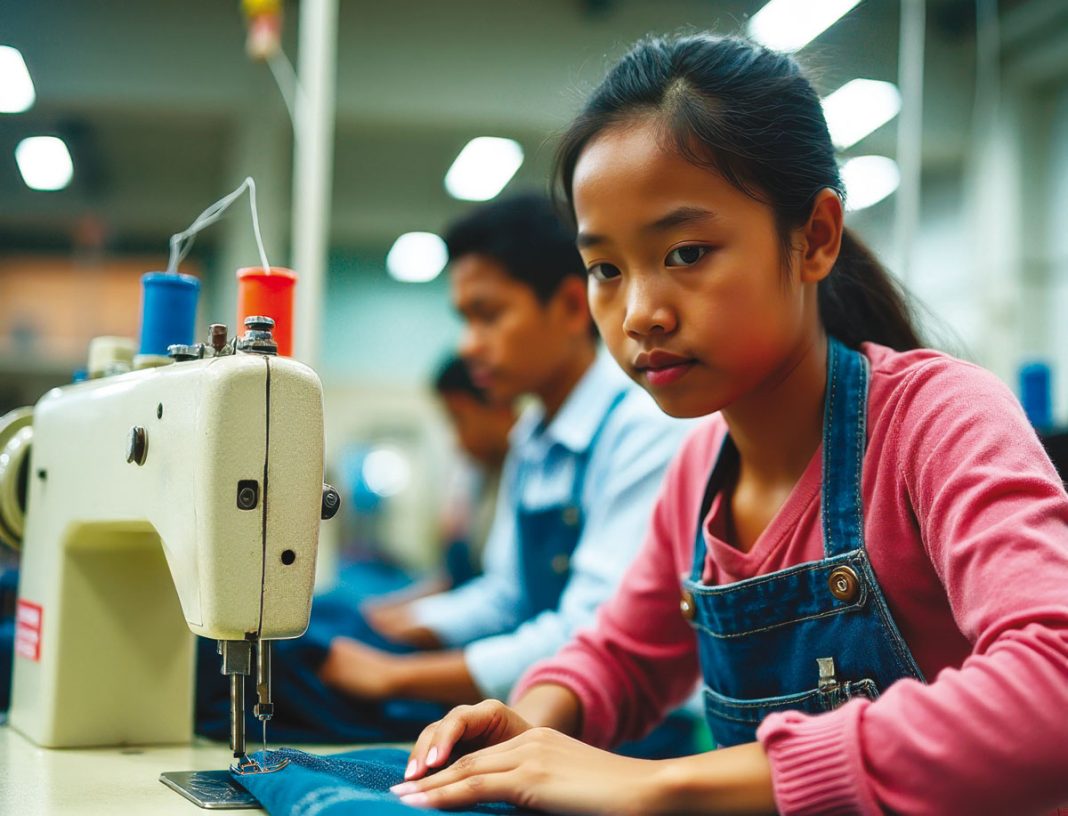

Despite consumption of record in the world, French textile industry is going through an unprecedented crisis. A decryption based on the most recent statistics shows how the lack of regulation promotes giants of fast food as well as their destructive social and environmental practices.
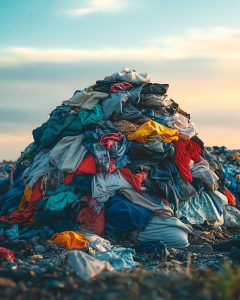 Upward consumption, A declining industry : since the 1960s, the share of French household spending devoted to clothing has fallen significantly. However, this reduction in expenditure does not translate into a reduction in consumption : quite the contrary, the quantity of clothing consumed has doubled in less than forty years. In parallel, the average lifespan of clothing has been cut in half, a phenomenon directly linked to the expansion of fast fashion. The fast-fashion model centered on low-cost mass production, made possible by labor exploitation and massive pollution, profoundly restructured the French textile industry. In France, Zara, H&M, Primark and other similar brands have gradually eclipsed the traditional players in the sector. This development has had dramatic consequences on employment : the textile industry has lost nearly 300,000 jobs since 1990 and the retail trade has seen 50,000 jobs disappear since 1971. In parallel, market concentration is increasing, with the 1% of players in the sector representing 80% of textile sales in France in 2022. The rest of the sector is hit hard by this competition. In 2023, all clothing and shoe stores in France saw their business volume barely higher than in 2016, while retailers like Zara and Primark posted increases of 70% and 119% respectively.. Store closures are massive, with a drop of 17,9% of the number of clothing stores between 2014 and 2021.
The expected anti-fast fashion law
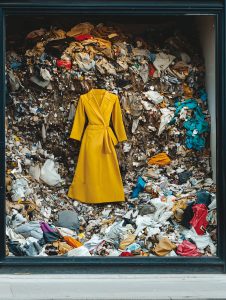 Faced with this alarming observation, Friends of the Earth France calls for a radical change of course to restore fairness in the textile sector. “The lack of regulation and unfair competition favored by fast fashion not only threaten the future of local businesses, but also that of the French textile industry as a whole. Fast fashion does not only have deleterious consequences on the environment and human rights. It is time for elected officials to take stock of the urgency. For that, the promising anti-fast fashion law passed last March by deputies must be put on the Senate's agenda as quickly as possible ! » declares Pierre Condamine, textile overproduction campaign manager at Friends of the Earth France, for which “without a strict legislative framework, France could see its textile sector completely disappear, for the benefit of foreign actors with socially and ecologically irresponsible practices”.