



Petroleum engineer, founder of the parachemical company EECA, Dominique Rio has designed a new process for regenerating used oils, suitable for limited deposits of lubricant waste in small or isolated territories, like the islands. The first regeneration unit implementing this disruptive innovation is planned in Reunion Island.
SC2EI : design and equipment company for the environment and industry. This name is worth remembering. Its founder, Dominique Rio, invented a revolutionary process for regenerating used oils. The first unit implementing this process is planned in Reunion Island. Engineer trained at IFPEN Dominique Rio sought and found a solution to the puzzle of processing used oils in territories whose deposits are too limited or too remote to be treated in large regeneration plants. The meeting, where 2,000 to 2,300 tonnes of used oil are collected each year, currently has no other option than shipping waste to mainland France by boat (a new ship carrying used oils among hazardous waste set sail at the end of November from the port of Pointe des Galets). Chemists and petroleum engineers have been working on the subject of regenerating used oils for decades. No truly satisfactory solution had managed to replace the heavy and complex physico-chemical process of regeneration requiring, to be profitable, to process tens of thousands of tons of used oils per year. By completely changing the situation, the process imagined by Dominique Rio has all the characteristics of a breakthrough innovation : technical simplification for greater efficiency, the reduced size of the installation, significantly lower energy consumption and production costs, without forgetting of course the environmental and economic progress of the infinite regeneration of the product.
A global issue
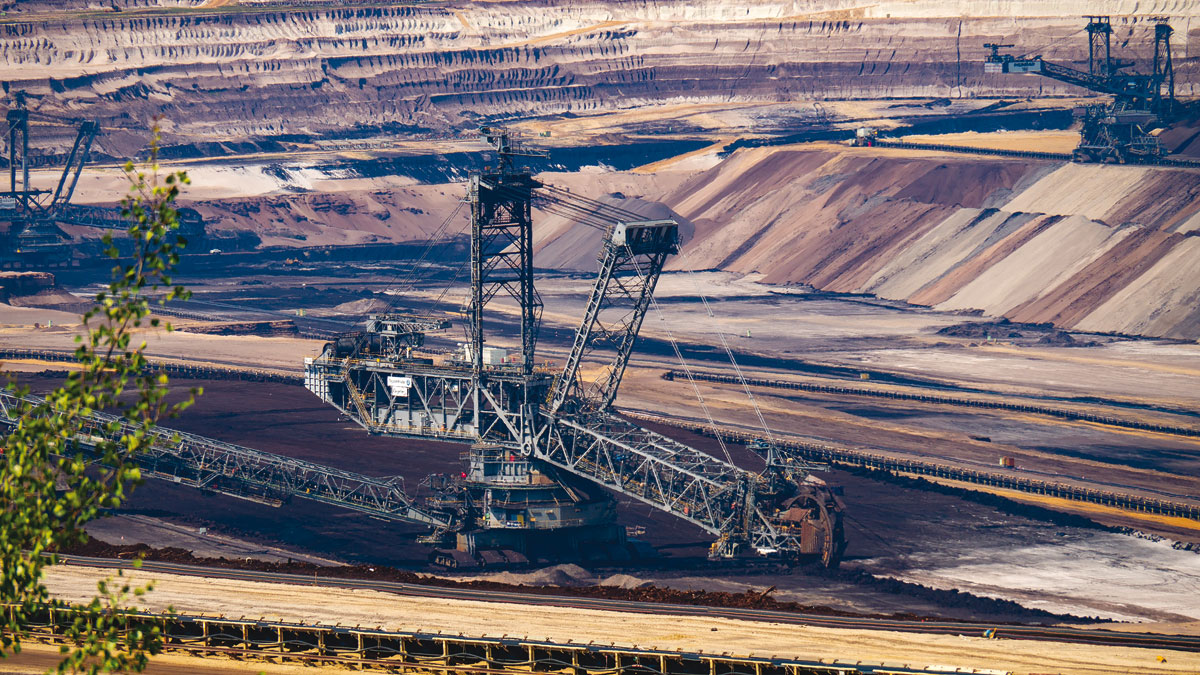
“I started thinking about the regeneration of used oils seventeen years ago, in view of the local constraints of the treatment of used oils. Their regeneration requires, in the current state of technology, very large deposits. We are on the scale of a refinery. There is no industrial tool to take care of small deposits in isolated territories like ours., or in landlocked regions that are difficult to access, sparsely populated and far from industrial centers. In France, we could also mention the Antilles, or Corsica, facing the same problem. All European islands are in the same situation. Mining industries, working in countries like Madagascar or elsewhere in Africa, use work equipment that consumes a lot of lubricants. They don't have an answer to this problem either.. The solution is to be able to regenerate all these small deposits of oil waste on site. » Economically viable used oil regeneration units from 2,000 tonnes of raw material per year therefore represent a considerable issue of general interest.
Tangential flow ultrafiltration applied to lubricants
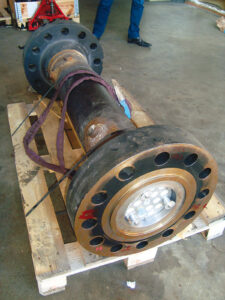
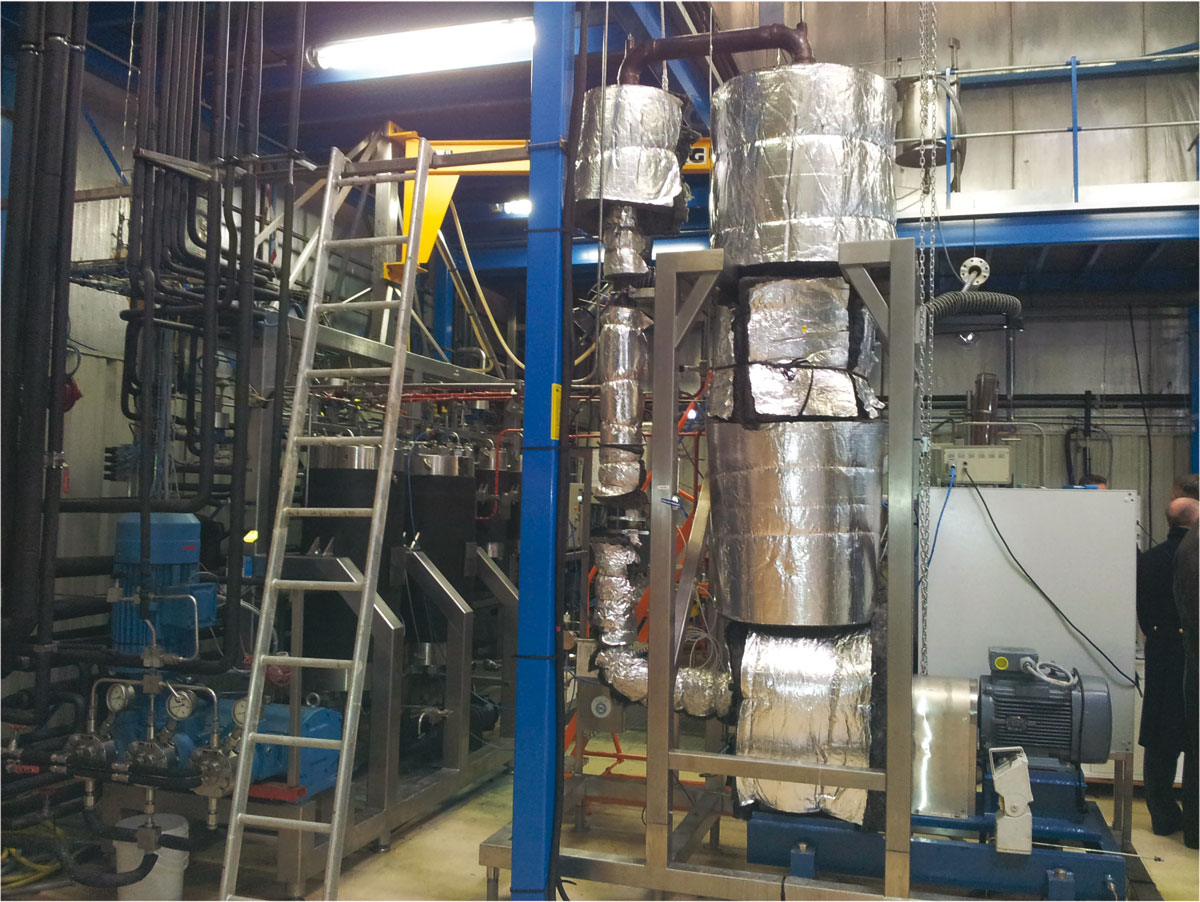
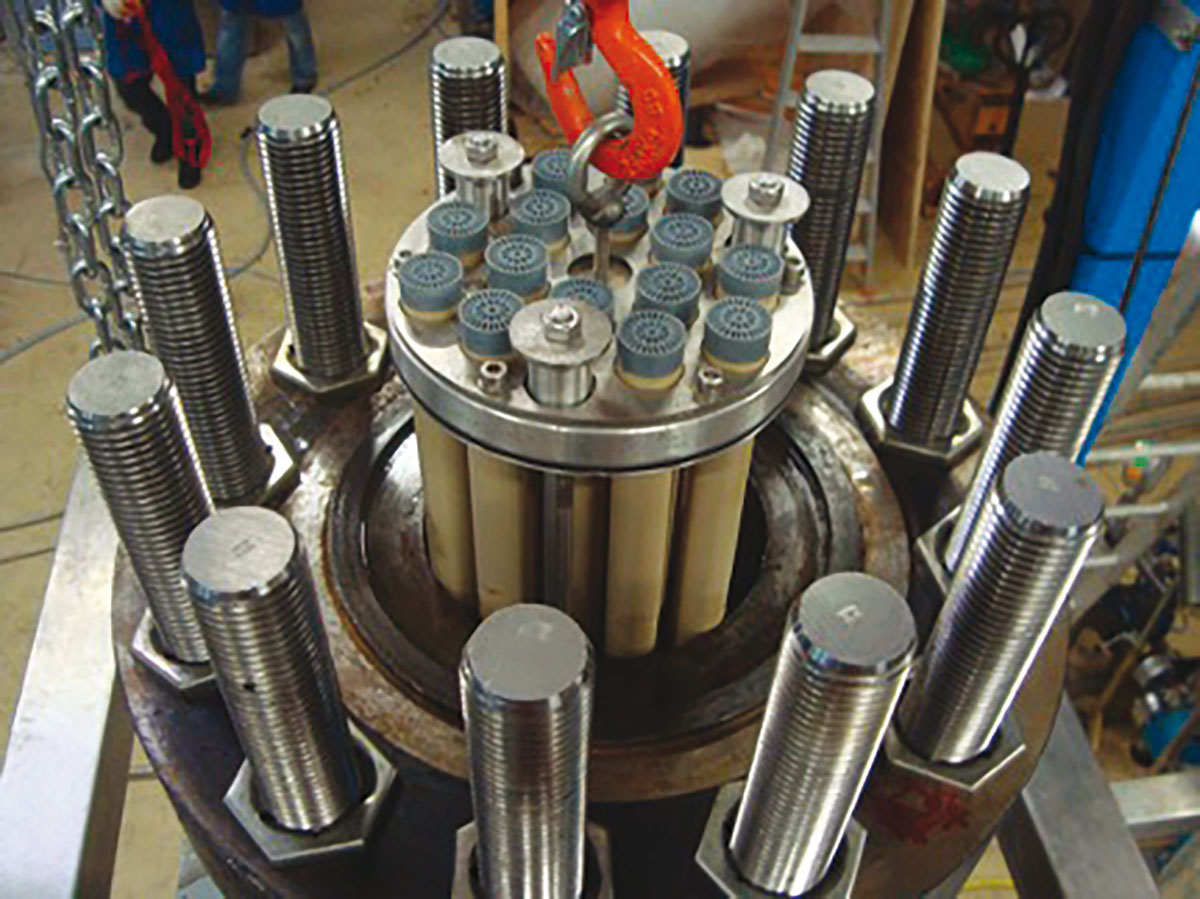
The solution imagined by Dominique Rio is based on the ultrafiltration of used oils using a ceramic membrane originally intended for the enrichment of uranium by concentration. A technology designed by the Atomic Energy Commission (CEA) for his own needs. “This filtration technology is extremely effective and the tool is proportionate to our needs”, explains Dominique Rio, which gives it another application. The engineer integrates it into a tangential flow ultrafiltration device, which passes the fluid tangentially to the surface of the filter. No more need for chemical reactions to regenerate oils, only a mechanical solution using cutting-edge technology to purify them. Custom designed and manufactured pumps ensure fluid circulation. Several luminaries in petroleum engineering provided advice and assistance in the creation of a full-scale industrial pilot in mainland France.. The technology has been validated. “We know it works. The next step will be to test the technical solution in a circular economy system in Reunion Island., by coordinating the collection of used oils, their regeneration and the return of regenerated oils to the market. »
Cyclevia, project support
The progress is major on all levels. “The installation requires a premises of 400 m2. It does not emit smoke, is low noise and produces no effluent. » Other superiority : the ultrafiltration process regenerates all used oils, while the physico-chemical process loses at least 40% of the material along the way. The total cost of the Reunion project would approach four million euros, after 1,5 million euros in study costs spent since 2006, including half a million euros for the technical study, 70% financed by ADEME five years ago. The national eco-organization of the mineral oils sector, Cyclevia, supports this project. Its general director, André Zaffiro, spoke on this subject last May in Leader Réunion. Cyclevia, which is responsible for the collection and recovery of used oils also in Overseas Territories, would supply raw material to the local regeneration unit.