
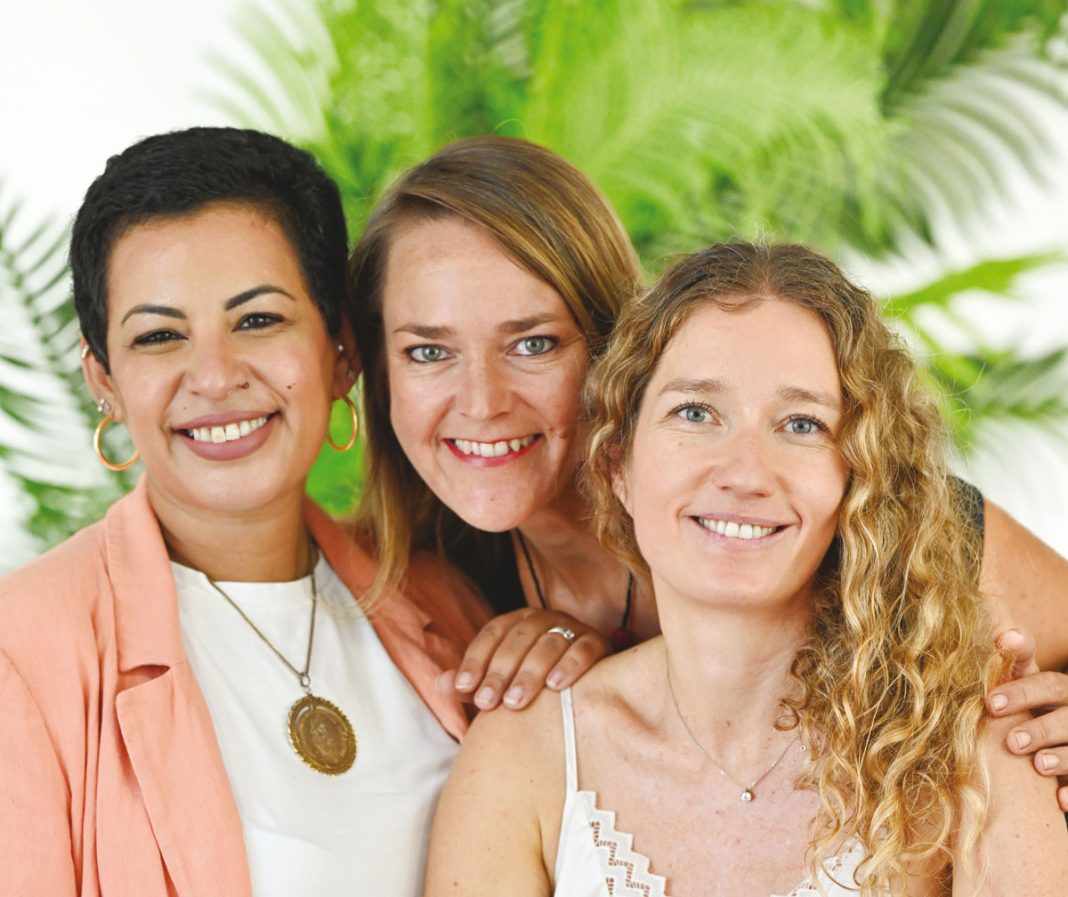

Three innovators, Three emerging companies, Three ranges of unparalleled products on the cosmetics market : This is the reality of The Island Cosmetics, Olica and Omaïdo. The three independent Reunion brands share a maximum requirement for naturalness and effectiveness in their products and a commitment to promoting the natural resources of Reunion and the Indian Ocean.. We asked them if they found it exaggerated to claim that their innovations place Réunion at the forefront of cosmetics.. You will read their answers, but here are the facts. Founder of The Island Cosmetics brand, Sarra Beldi-Vencatachellum has designed the first solar makeup brand based on natural, preservative-free ingredients, also ensuring high sun protection (index 50). The Island Cosmetics is one of the accelerated start-ups within the innovation ecosystem of the Village by CA in Reunion Island. Founded by Marina Féat-Gultzgoff, Omaïdo was, two years ago, the first French brand of care 100% of natural origin entirely formulated cold, in order to preserve the active ingredients of plants as much as possible. The Omaïdo skincare range remains at the forefront of this process, and applies it with turmeric, its main ingredient. With her phytochemist associate Emmanuelle Ferrere, Camille Legrand, founder of Olica, reinvents the know-how of Reunion herbal tea makers on a scientific basis to create emulsions concentrating the benefits of plants from Reunion Island and offer cosmetics manufacturers and perfumers new plant extracts and essential oils, not existing anywhere else. Recognized by the professional cosmetics community, these brands are now looking for commercial partners who share their level of commitment. A commitment that is not favored by the absence of a structured cosmetics sector in Reunion Island. Qualitropic, competitiveness cluster for innovation in the tropical bio-economy, carries a project for the aromatic and medicinal plants sector (POPE) in the Indian Ocean. It is therefore necessary to highlight the recent appointment as president of Henri Beaudemoulin, decent of Pat Zerbas, another innovator in the valorization of Reunion’s plant wealth, who knows perfectly the issues of innovation in cosmetics in Reunion.
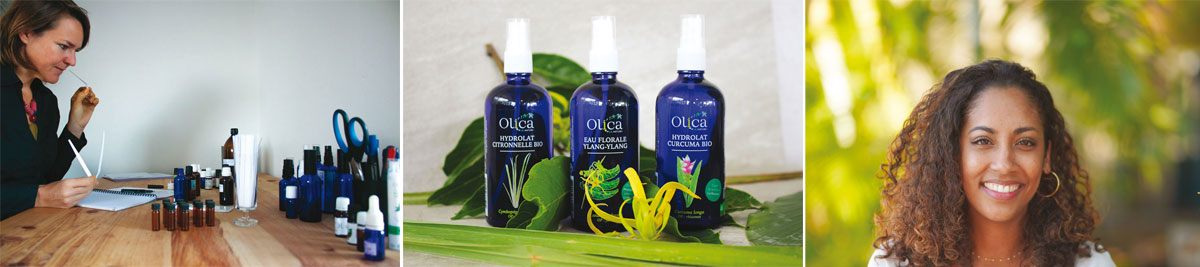
In the middle, new hydrosols launched in March 2025. To the right, Emmanuelle Ferrere, phytochemist and associate of Olica.
Meeting Leader : Promoting the active ingredients of plants from Reunion Island and the Indian Ocean to create innovative care and beauty products : is this a good definition of your projects ?
Camille Legrand : Reunion has a heritage, a tradition of plant care that has been preserved. At Olica, we seek to adapt these treatments to the modern lifestyle. We have developed emulsions that simplify the use of essential oils and place these treatments at a price accessible to consumers.. Our strength, it is to exploit the essence of the plant in a short formula. Our products contain percentages of active ingredients well above the average cosmetics. Ease of use meets the daily needs of today's women or men, always very busy.
Sarra Beldi-Vencatachellum : Chez The Island Cosmetics, our adventure took an unexpected turn in Reunion, where we discovered a precious secret : sun makeup. Our innovation ? Combine foundation and sun protection to enhance all skin tones, all skins, without compromise. At the heart of this high protection is an exceptional plant, a precious oil from the natural riches of the island. More than just makeup, a true beauty revolution inspired by Reunion Island !
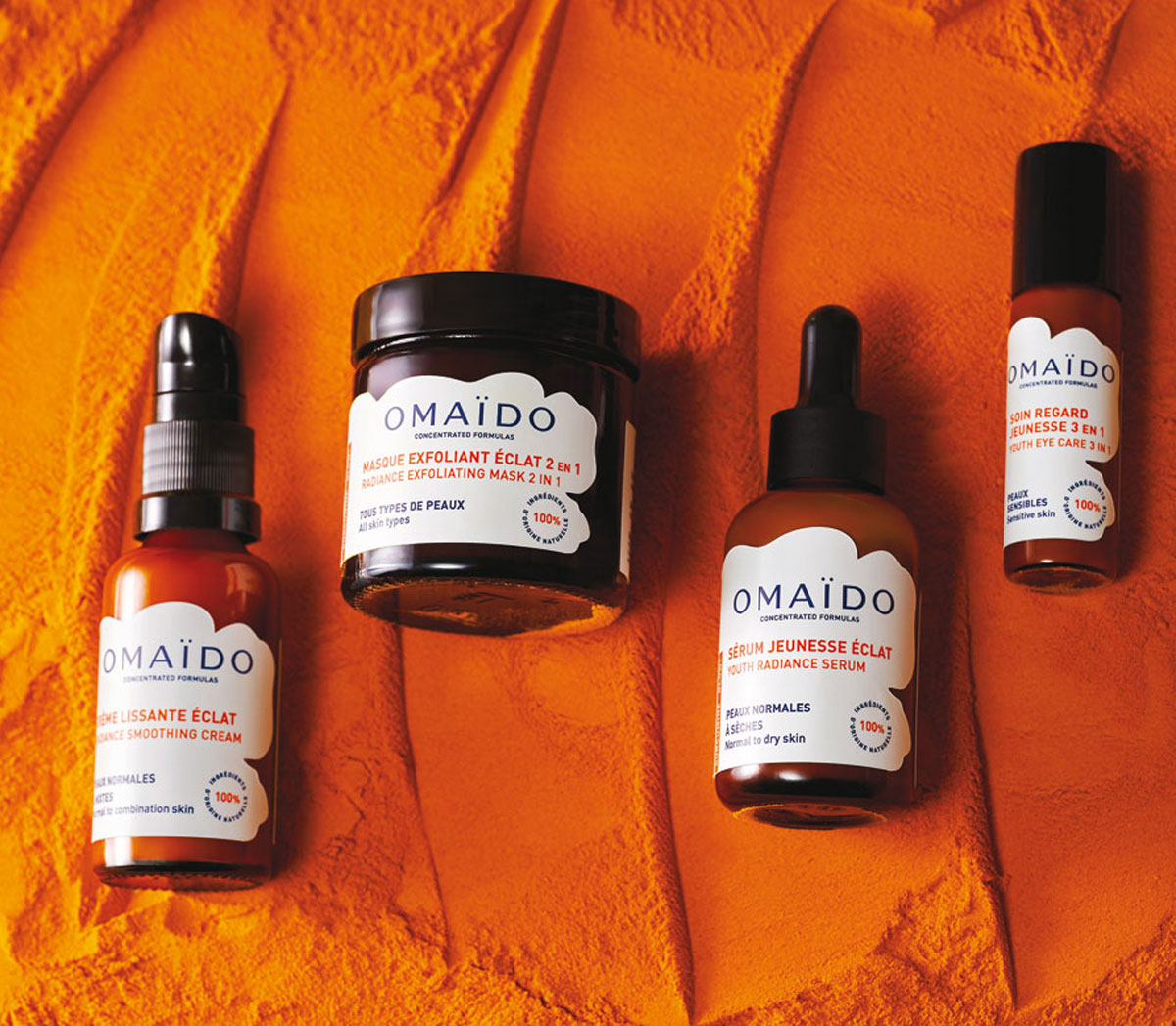
Marina Féat-Gultzgoff : At Omaïdo, the promotion of Reunion Island is in my personal DNA. For fifteen years, I acted in favor of the development of the territory, particularly Reunionese agriculture. It was fundamental for me to work with local producers and with local raw materials., like Bourbon geranium, certainly the best-known plant in Reunion Island in cosmetics, and turmeric, which is also the island’s flagship spice, still very little valued in cosmetics even though its virtues are multiple. I would like to work from this pair, Bourbon geranium and turmeric, before going further towards other plants from Reunion Island.
Is it an exaggeration to say that projects like yours place Réunion at the forefront of cosmetics? ?
S. B.-V. : I just won an award at MakeUp in Los Angeles, one of the leading trade shows for the global cosmetics and beauty industry ! Other awards have already shown me that the innovation of my hybrid product is recognized by the professional community.. I was even told that I was opening a new market segment ! By its location in the Indian Ocean and its specificity, Reunion as a whole has always been obliged to innovate, in all areas. In cosmetics, the island is an open-air laboratory. The different origins and cultures of its population constitute a considerable asset. These are all skin types. I think this diversity allows us to design products that meet the needs of all skin tones.. It puts us ahead of other brands, even the biggest.
C. L. : What I can say for Olica, is that we respond to market expectations which are in full development, particularly for the entire B to B part. We offer cosmetics manufacturers and independent perfumers 100% natural plant extracts., without organic solvents, including absolutely new species, that cannot be found anywhere else and which are in line with the main market trends on the need for naturalness coupled with scientifically proven effectiveness. We are thus part of this current of innovation which currently carries cosmetics.
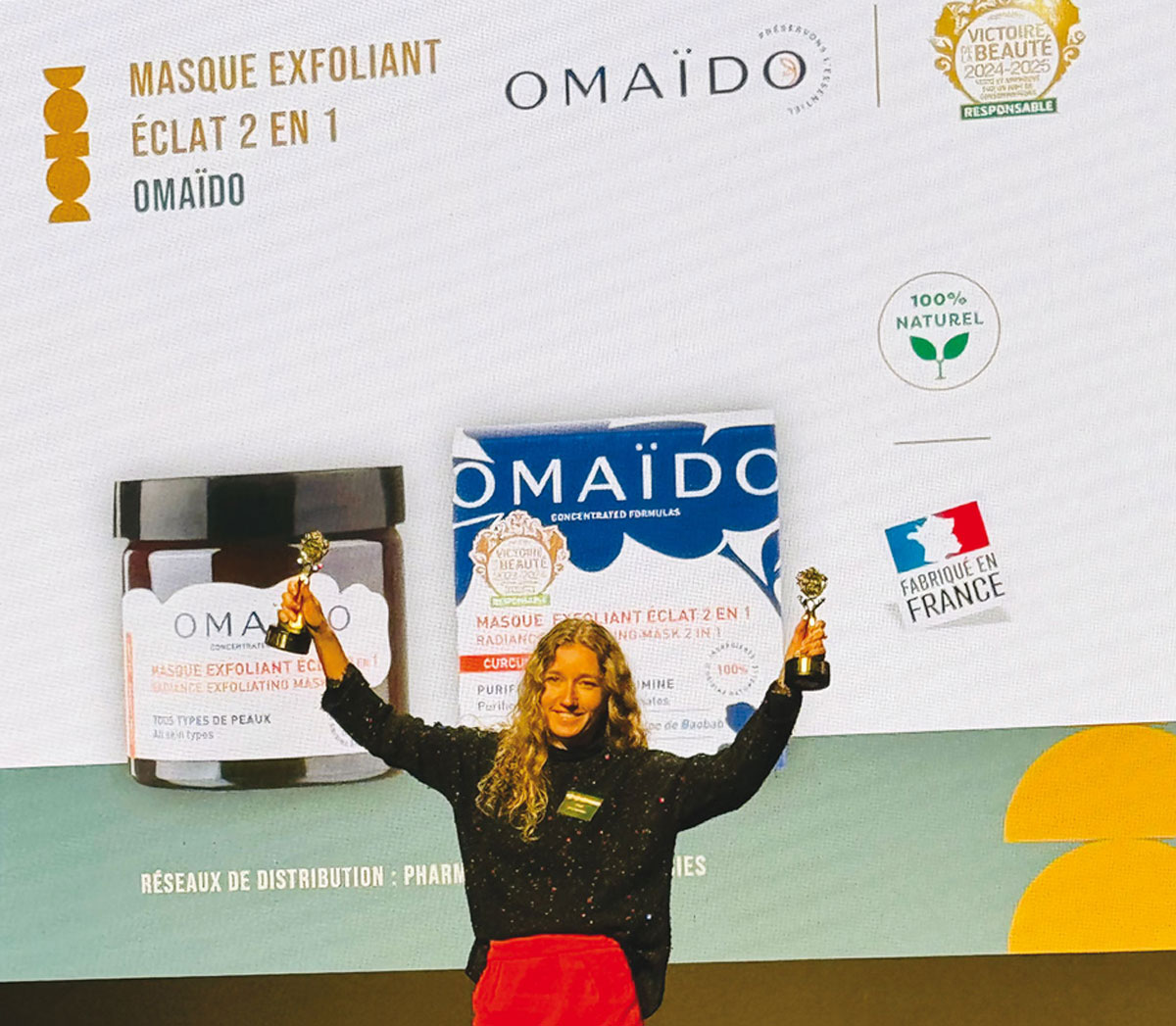
M. F.-G. : Omaïdo won 4 prizes over the period 2024-2025 at the national level : three Victories for responsible beauty and a Best Pharma Product. This is further proof that Reunion Island has its place in the world of cosmetics and that our innovations live up to those of the biggest names..
In your opinion, is it just a coincidence that Olica, Omaïdo and The Island Cosmetics appeared around the same time, three or four years ago ?
M. F.-G. : It’s a coincidence in the sense that we didn’t know each other at the time.. We didn’t think about our projects in parallel. But I see it as a sign of a certain maturity of an environment. This corresponds, as Camille said, to a market expectation of more naturalness. There is also awareness of the richness of Reunion cosmetopeia and its very insufficient valorization. So a coincidence from the point of view of the calendar, but not in relation to public expectations or the undervaluation of our biodiversity and its cosmetic riches.
S. B.-V. : Other islands are ahead of us in the field of cosmetics, like in the Antilles. Maybe the three of us arrive at this time to start catching up. This incredible wealth of Reunion, we cannot exploit it due to lack of organization and established sector. Cosmetic Valley, the national competitiveness cluster for the cosmetic perfumery sector, created a branch in Martinique, where there are also various projects, to promote such a sector. We had the courage and ambition to launch ourselves in Reunion. I hope that our common desire to innovate will encourage Cosmetic Valley, or other organizations, to come and settle with us. I add that we know each other and that we work in a partnership approach.
C. L. : We exchange a lot and collaborate in part. The idea, it is that we can all benefit from these valorizations that we each implement.
Olica has put 7 ha in organic culture of endemic plants in Piton Saint-Leu. Omaïdo sources its supplies from organic farmers in Réunion and Mahorais, The Island Cosmetics claims ingredients from Reunion biomass : Does the Réunion or Indian Ocean origin of the raw material constitute the product for you? ?
M. F.-G. : At Omaïdo, very clearly : the objective is to provide as much as possible in Reunion. But the cosmetics sector is not structured, especially in terms of agricultural sourcing. For my part, I was quickly confronted with this reality : producers were not trained to provide regulatory compliant raw material for cosmetic use. I therefore lowered my ambitions by focusing on three raw materials exclusively. : geranium, turmeric and brown sugar. Work was carried out upstream with Armefhlor* to develop a production corresponding to my needs. I also went to Mayotte to look for ylang-ylang essential oil. It was important for me to be able to support this other French island, and it is even more so after the passage of cyclone Chido. I also turned to Madagascar for vegetable oils, because we do not produce any in Reunion. But my priority remains that my flagship assets come mainly from Reunionese producers based in Reunion Island..
S. B.-V. : There is no shortage of natural resources, whether in Madagascar, in Mayotte or Reunion. In the meeting, Unfortunately, as Marina said, there are a lot of obstacles to obtaining supplies. I raise another problem at this level : cosmetic products need certifications. But to get one, Cosmos for example, the entire upstream chain must itself be certified. Work must therefore be done to support producers in this direction.. As far as I'm concerned, the two laboratories in mainland France with which I work source their supplies from Reunion Island, they are the ones who support their producer suppliers. This demonstrates that we need a structured sector to continue working with local ingredients.. There is perhaps a source of inspiration from Madagascar, where the producers, with very few resources compared to France, have structured an ingredient sector. Everything is not perfect, but we could look at how they did it.
C. L. : At Olica, we have cultivated endemic plants on our organic farm in Saint-Leu, we also source traditional plants from Reunionese farmers and we collect invasive species, particularly on the territory of the ONF. We also supply ourselves to Madagascar for everything that cannot be found in Reunion Island., or at unacceptable prices. I am quite proud to work with my Malagasy partners. I think that it is also a role of Reunion Island to help Madagascar promote its products in a close relationship..
Which customers do you target and what are your distribution channels? ?
M. F.-G. : I am developing Omaïdo both in Reunion and in mainland France. In terms of distribution networks, I am 90% in pharmacy. My range requires advice, to explain the 100% natural origin, cold formulation, the active ingredients, the plants that make up my products. But I am also at Monoprix, in concept stores, aesthetic institutes and other places.
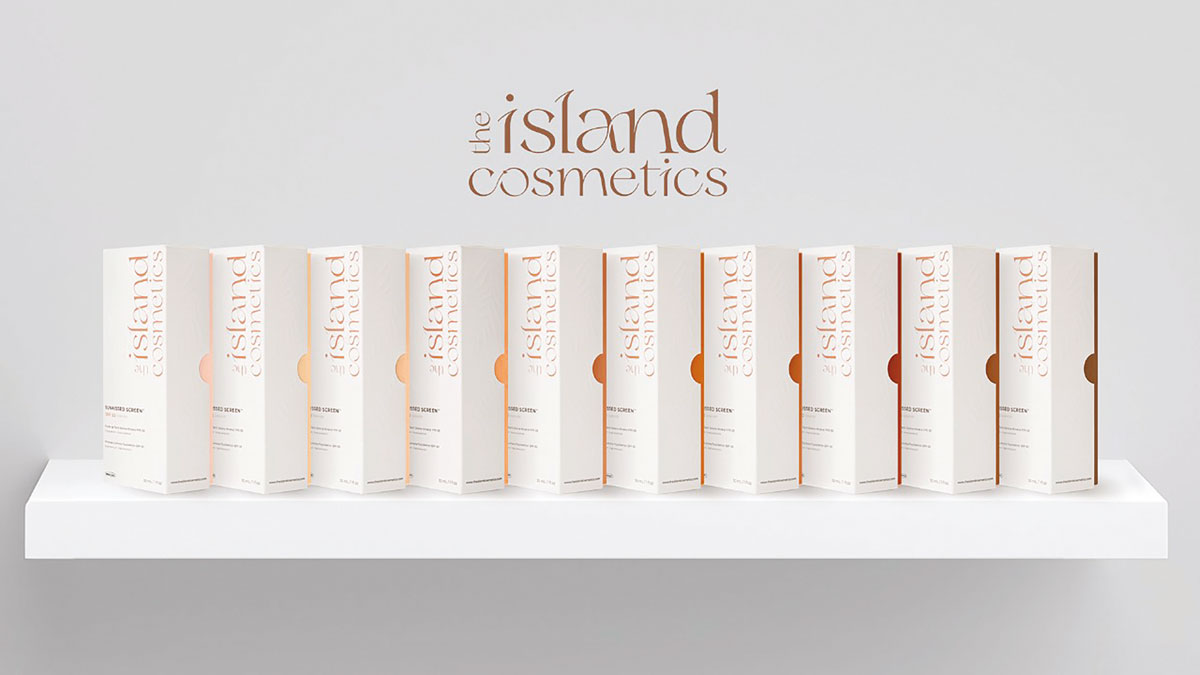
S. B.-V. : At the beginning, I saw in online sales the distribution circuit of The Island Cosmetics. But my complexion oil comes in 16 shades, and cosmetics customers need to test the products. I integrated AI and developed an application on the site to make it easier to find the right shade, but it is not yet common practice to use this type of digital tool. So I am currently in pharmacies in Reunion and in Sephora type stores in Mauritius. The Island Cosmetics is distributed in New York and Hong Kong in concept stores. On the other hand, in a city, I don't have any points of sale yet. otherwise, I continue to sell online and deliver all over the world.
C. L. : Our products also need to be explained for the B to C part. So we are in the pharmacy. We provide them with a booklet and regularly train the teams to develop their knowledge of local plants so that they can advise consumers properly.. We are also in stores specializing in care and beauty. We realized that there was a clientele in this channel who was looking for natural products like ours. En B to B, we mainly target cosmetics manufacturers and perfumers, to whom we offer essential oils and very specific extracts from our innovative technology developed from the beginning of Olica's history.
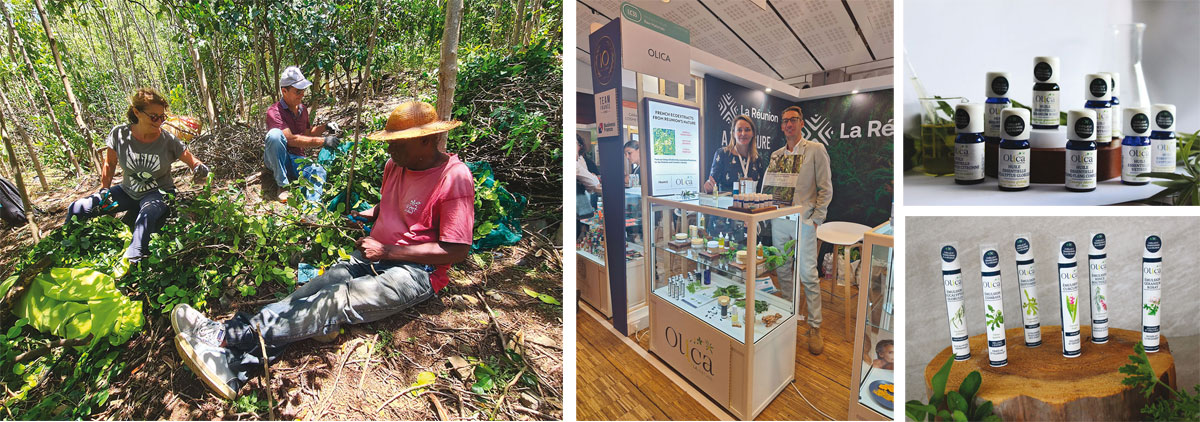
via the Cosmetic 360 trade show, last October in Paris, where the B to B offer was officially launched
Are you having difficulty being distributed? ?
M. F.-G. : The complexity, I think, shared by our three brands, is that we do not yet have sufficient notoriety for the products to sell, if I may say so, “all alone”. We need business partners, as Camille mentions. Partners who get involved, who want to recommend products, to differentiate, who also want to bring to life and promote Reunionese cosmetics. We are at this stage. After, it is certain that in Reunion as in mainland France or elsewhere, no one is waiting for us. From my little experience, if the first difficulty is to open points of sale, the most complex thing is then to keep them alive and ensure regular sales. So that the products “go out”, teams must be trained, pass regularly, motivate them. This is where our geographic positioning poses a problem. We have a real challenge linked to distance.
S. B.-V. : Solar makeup, the first on the market, necessarily needs to be explained. This is not a product that you put on a shelf and wait for it to go away on its own.. Another difficulty comes from the high cost of made in France. SO, oui, we need business partners who help us push the doors open. If we open the door, the product will sell. We will put the means for this. But we must first be trusted so that we can enter markets.
C. L. : I completely agree with what Marina and Sarra have just said.. Our plant emulsions, we explain them, we form, we communicate, but we need the points of sale to relay. Where this relay exists, things work : in Korea, where we sell our essential oils, we have a commercial partner who represents us and develops us. We are interested, he believes in us, because we have original products that cannot be found elsewhere. Eventually, it is rather locally that we sometimes have difficulty establishing real partnerships, while our reason for being is to promote péi know-how and to work in a short circuit.
How are your innovations perceived and received by the professional cosmetics community? ?
S. B.-V. : I don't come from the world of cosmetics, not even the chimie, nor scientific pharmacy. That professionals from these worlds validate my innovation, as for example by the international prize that I have just received in the United States, it’s an incredible recognition for me. It’s great to be recognized when you start. I would say the professionals are intrigued. I even had an offer to buy back my formula.
C. L. : We launched our B to B range at the Cosmetic 360 trade show in Paris last October. We aroused a lot of curiosity, attractiveness for our products and for our innovative extraction technique. Since, we do a lot of sample shipments, but the involvement is important for customers, the process is slow, one year on average from sampling. Our first order of perfumers arrived at the beginning of March !
M. F.-G. : The national recognition represented by the Best Pharma Product and Victoire de la Beauté awards opens doors for me. I am in discussions with Yves Rocher to join their marketplace of French brands, natural, etc. Also with Private Beauty, private sales network of beauty products. Things are more advanced with French Beauty, concept store which brings together around forty independent cosmetics brands. I am joining their Parisian store and their e-commerce site on April 1st. Awards give credibility to our brands and enable us to reach marketing milestones. Pharmacists are sensitive to it, consumers too. I had my packaging redone to include English alongside French and to include the awards that my products have obtained.. I feel it's important for everyone.
Have you already anticipated the stage where the quantities of products requested will increase? ?
S. B.-V. : I anticipated it by choosing from the start partners capable of producing both small and large volumes..
M. F.-G. : Omaïdo is a chick. The order minimums requested by manufacturers are heavy compared to our current market size. It is an asset to have industrial partners who will be able to respond quickly to larger volumes.. But there is the upstream part of the producer, with its weaknesses, that we were talking about earlier. With geranium, turmeric and sugar, I chose Reunion raw materials that were secure from a sourcing point of view in terms of quality and quantity.
C. L. : “What volume are you able to produce? ? » : This is one of the first questions asked by B to B customers.. We have cultivated 7 hectares to be able to produce without having to harvest from the wild., and we also have producers waiting for our orders ! We have just finalized a laboratory which will allow us to change scale. With this laboratory, we are now able to provide them with an appropriate response on volumes. This is a very important investment for us, but it's our choice. This risk-taking, I am convinced of it, will be fruitful one day or another.
In mainland France too, cosmetics projects are born in the regions : Is this a sign of customer fatigue for the big brands and laboratories that rule the roost in this market? ?
M. F.-G. : A whole segment of the population is looking for something else. I think our projects reflect this desire for more transparency, traceability, local sourcing of products, to make cosmetics a committed purchase. More and more women, and men too – because more and more men are using cosmetic products – want to know what they are buying and give meaning to their purchases. This is a fundamental trend. Unfortunately, there is also the reality of the wallet in the economic context that we know. But we are part of this trend of better consumption.
S. B.-V. : People are thinking more about what they put on their skin. We have seen this since the Covid crisis. The big challenge, for all independent brands like ours, it is to respond to this search for naturalness which remains associated with a requirement for effectiveness. It requires a lot of commitment to impose scientific rigor associated with this dual search for naturalness and effectiveness.. I think that at this level we, young brands, let's go further than traditional brands. In my opinion, 98% natural, this is not the same as 100%. And I want 100%. There are no preservatives in my product. This is my promise and I keep it. I manufacture under vacuum and I had to make a special airless bottle. I am intransigent on certain aspects that seem fundamental to me, where large groups, with all their standards and multiple processes, don't even ask the question. We add this burden of intransigence to our smallness and our distance from major markets. But that’s what makes innovation and what makes us different.
C. L. : Our search for simplification results in a maximum of six ingredients per product. This is a huge commitment for us, because cosmetic regulations require that the formula be able to prevent the proliferation of pathogenic bacteria. So, in order to minimize the need for preservatives, we have chosen to present our emulsions in airless packaging (no contact with air).
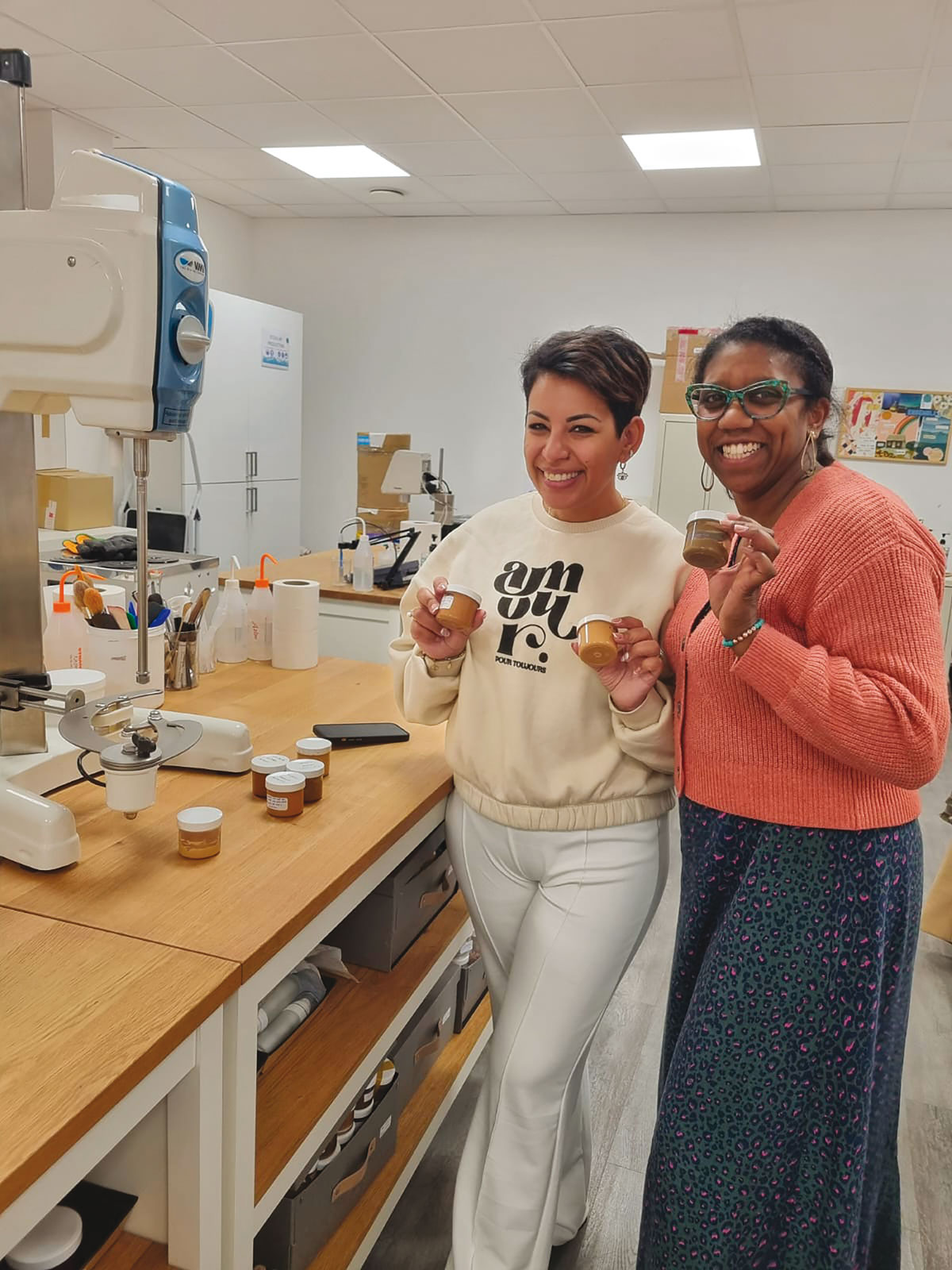
Below : the new laboratory that Olica also puts at the service of other cosmetics projects.
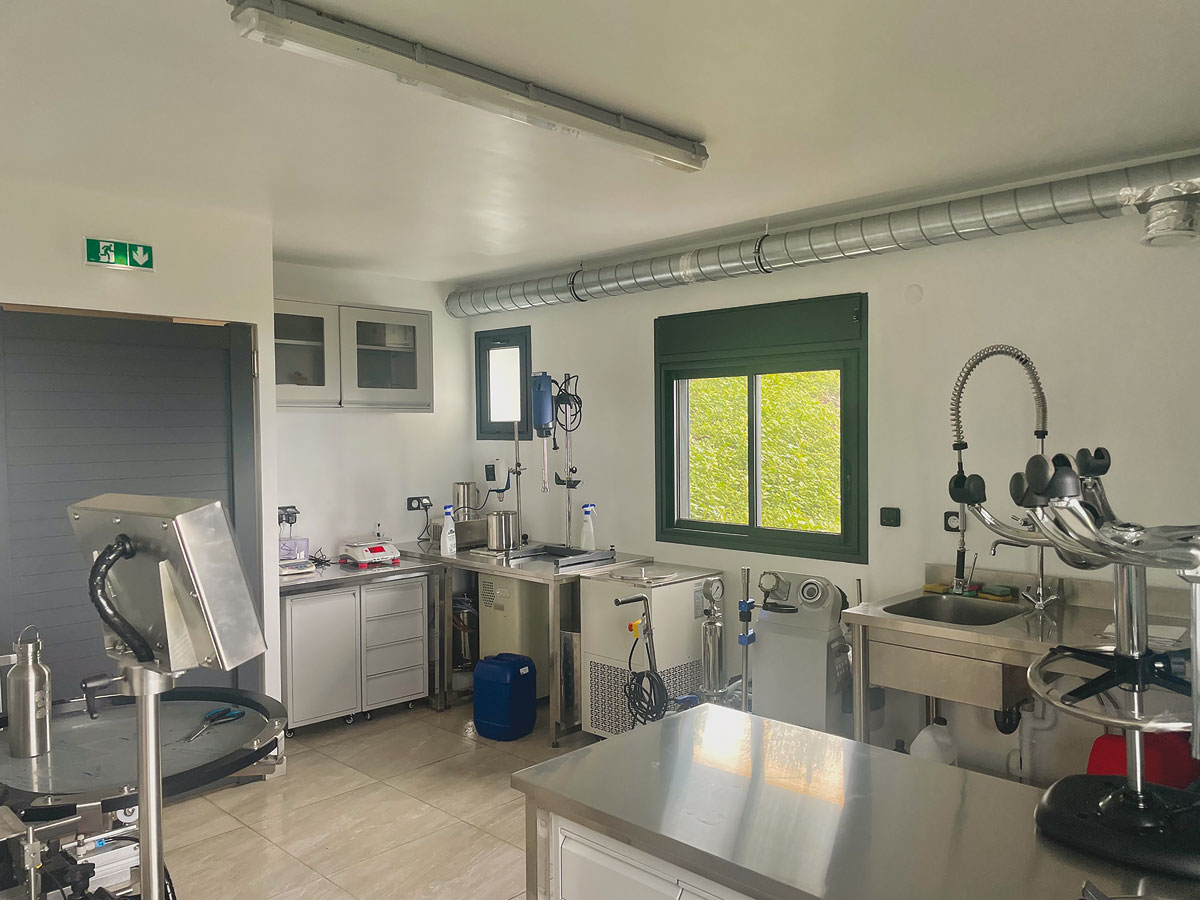
Olica opens its new plant extract production laboratory to other project leaders. Do you see this as a step forward to encourage Reunionese innovation in cosmetics? ?
C. L. : We wish to develop this partnership approach in Reunion. Our laboratory meets regulatory standards, it may interest other project leaders who would like to produce locally. We can rent it, produce to order, package to order, we can provide training on all cosmetic procedures and techniques. Our core business remains producing and selling cosmetic ingredients., but we are open to sharing our knowledge and making our equipment and skills available.
S. B.-V. : The laboratory with which I work in mainland France is in a collaborative approach. I work with ESAT for the packaging of my products. It was a commitment from the start.
M. F.-G. : It’s thanks to Sarra that I found my logistician. Camille provides me with my geranium hydrosol. I think we have no choice but to help each other in one way or another. We are on an island and we are not competitors. By collaborating, we will have a better chance of being able to emerge and make our voice heard.
A voice that would say what about Reunion ?
C. L. : That it has the potential to become a cosmetics hub, there are so many things to promote that are not yet well enough known. We are fortunate to have been able to preserve ethno-pharmacological know-how which has been transmitted orally to us : it’s exceptional in France. We have this chance and it’s important to make it known, because this can give a new dimension to Reunion. The meeting, it’s made in France, and the island could become the hub of the Indian Ocean for manufacturing cosmetic products.
M. F.-G. : Reunion would be the ideal place to carry out product effectiveness tests. As Sarra pointed out, we have a very wide range of skin tones. In France, there is no equivalent place, and even in the world there are very few.
S. B.-V. : I did a lot of testing myself locally. Setting up a cosmetics use testing laboratory would be extremely interesting.
What help and support would you need today to progress? ?
S. B.-V. : We need committed commercial partners and help to structure a real cosmetics sector in Reunion. The Cosmetic Valley competitiveness center is very active in other overseas territories. He created an annex to the West Indies. In the meeting, his intervention remains punctual. Cosmetic Valley has access to large groups and the capacity to put forward innovations. If he came to settle down, he would see precisely what is being done here. Cosmetic Valley explains that the first step in establishing a sector, it is that the actors learn to know each other and seek common solutions to common problems. I think we are there in Reunion : There are several of us who want to form an association. In Martinique, it's a brand, Kadalys **, who was the driving force in this process. Hence the interest in succeeding in establishing a local active center to be able to discuss with the professional community.
M. F.-G. : Especially with recognized products like ours.
C. L. : We have a very strong commitment, as we described it to you. Local communities, institutions, help us to make ourselves known. We would like business partners to also feel this commitment.
* Armeflhor : Reunion Island Association for the Modernization of the Fruit Economy, vegetable and horticultural.
** Kadalys : Martinican brand of organic and natural cosmetics with banana active ingredients.
We thank the Village by CA Réunion, unique Reunion innovation ecosystem offering tailor-made support to local start-ups, for facilitating the completion of this cross-interview, as well as taking photographs, on its premises.
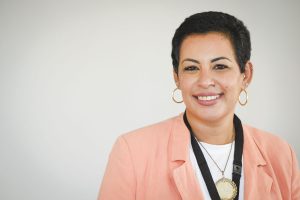
Sarra Beldi-Vencatachellum
After training in business school, Sarra Beldi-Vencatachellum accumulated several experiences in the international luxury hotel industry before settling in Reunion Island. The Island Cosmetics has its source in his desire to undertake, but also in a journey marked by a personal ordeal, where makeup played a therapeutic role.
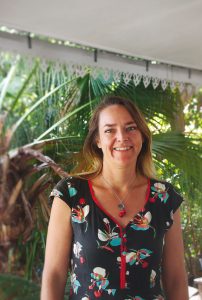 Camille Legrand
Farmer's daughter, trained in chemistry, to sensory analysis and commerce, Camille Legrand worked in mass distribution and then in marketing consulting, before launching with Emmanuelle Ferrere, phytochemist and associate, in the Olica project.
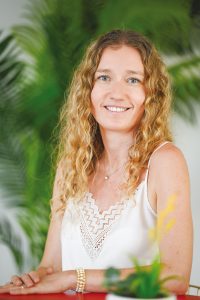 Marina Féat-Gultzgoff
Graduate of Sciences Po, Marina Féat-Gultzgoff worked to defend the interests of the French Overseas Territories within European institutions in Brussels. In the meeting, she served as general secretary of the Réunion interprofessional livestock association, meats and milk (ARRIBE-ARIV), before creating Omaïdo.