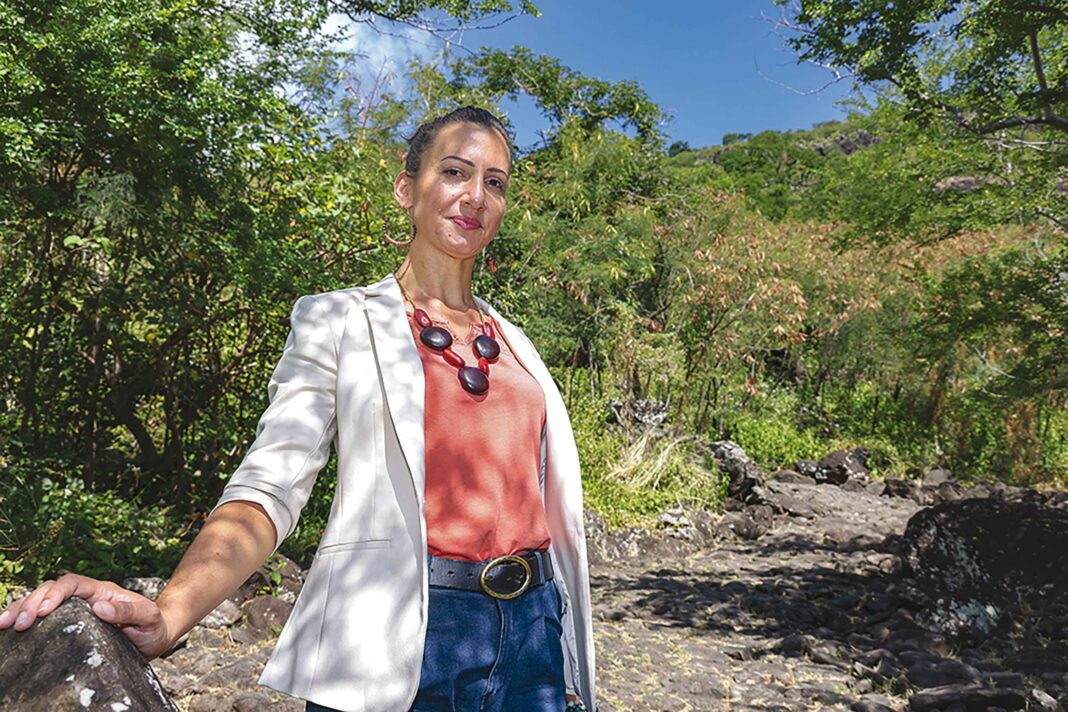

Departmental Ecological and Solidarity Transition Plan, Agripéi 2030, Plan cinema, Million Tree Plan, Sustainable Mobility Plan… Owner of 40% of Reunion territory, including forests, the Department is on all fronts of environmental responsibility. However, its role in this matter is still poorly understood.. Camille Clain’s explanations, deputy vice-president for environment and sustainable development at the Department.
What does the Department's skills cover in matters of environment and sustainable development? ?
The Department of Reunion Island has long been committed to policies in favor of sustainable development and environmental protection in the territory of Reunion Island.. We wanted to strengthen this commitment by adopting our first Departmental Ecological and Solidarity Transition Plan in March 2021.. This illustrates a strong desire of the community to embark on the path to a lasting change of model and habits in order to respond to both ecological and climatic threats weighing on the island.. Both in favor of efficient and resilient agriculture – Agripéi 2030, Plan bio -, that in favor of the preservation of natural spaces and the biodiversity they shelter. The Department is leading an ambitious reforestation program – plan a million trees for Reunion – and contributes to the balanced structuring of the territory, especially rural, through road developments and overall management of water and hydraulic developments. Finally, it contributes to solidarity, to integration and employment by paving the way towards sustainable economic development that is profitable for all through innovative actions capable of fully bringing the territory into a circular economy logic. It also intends to do its part in the transition by reducing its carbon and environmental footprint.. The entire administration is currently transforming its practices and integrating environmental concerns. : energy, waste, mobility and digital pollution, are all subjects on which the community is working and progressing.
Natural spaces for which the department is responsible, and the environment in general, do not seem threatened in Réunion. Is it necessary to strengthen their protection ?
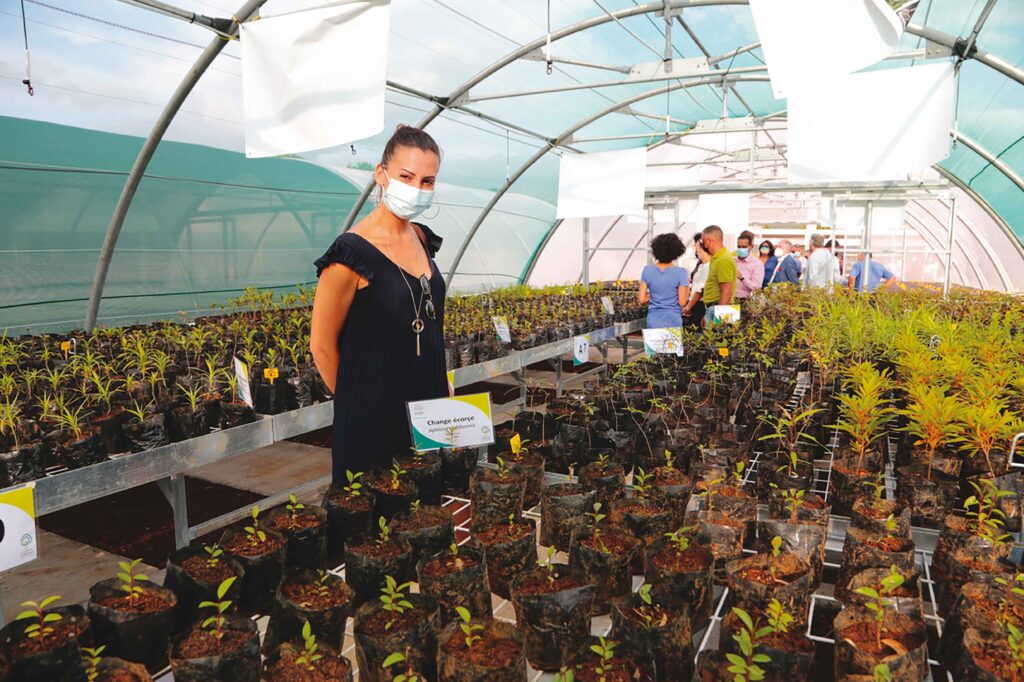
Contrary to appearances, the natural spaces for which the Department is responsible are strongly threatened. As in any island territory, Reunion's biodiversity is characterized by the low resilience of its natural habitats and the fragility of its endemic species. So, Currently, nearly a third of the endemic species of Reunion Island are threatened with extinction., 30% of the vascular flora – i.e. 275 species – and 22% of terrestrial vertebrate fauna endangered. Mainly due to the fragmentation and destruction of natural habitats caused by fires, urbanization… and also because of invasive exotic species. The meeting, biodiversity hotspot, is also recognized as a global priority in terms of biodiversity conservation. It is aware of these challenges that the Department devotes between 15 and 20 million euros each year to their conservation.. The main part of its action consists of implementing work to restore natural environments. : fight against invasive species to limit their proliferation and prevent them from modifying our unique environments and landscapes in the world ; native and endemic plant operations to strengthen natural environments, or even rebuild the most degraded spaces. To reverse the trend, the Department has also chosen to go even further through its One Million Trees Plan for Reunion Island.. This biodiversity recovery program aims to bring back the forest wherever it has disappeared, even in urban areas where micro-forests representative of the environments originally present in the neighborhoods where they will be planted will be established.
Little is known that the Department is the owner of the Reunion forests and that it has, as such, responsibility. Why this discretion ?
The Department actually owns nearly 100,000 ha of natural environments., i.e. almost all of the natural environments of the Island : 40% of the island’s territory, of which nearly 80% constitute the heart of the Réunion National Park, listed as UNESCO World Heritage. As I just explained, it is also the main actor in biodiversity in Reunion, competent, under the law – articles L142-1 et seq. of the Urban Planning Code – to carry out a policy of protection and enhancement of sensitive natural areas. It is thus the main financier of the work programs implemented for the preservation, the maintenance and enhancement of these natural spaces, ensuring the role of EAFRD management authority, main European structural fund mobilized for investment in forests. He is thus the leader of the network of natural area managers whose actions he largely finances.. Our role is above all to know how to unite, to create synergies with all partners, for a common cause, our forests. This is the reason why the people of Reunion identify these natural space managers more easily., whose roots for some are historical in the territory, like the National Forestry Office. However, it is the action and funding of the Department which are the driving force behind the conservation policies for the natural environments of the Island.. I would add that the Department of Reunion is the only one in France to have such forest heritage and to deploy so many resources for its conservation and development.. As such, I want to underline all the contribution and relevance of the One Million Trees Plan, which is a real unifying territory project, and which makes it possible to increasingly identify the Department as a major player in biodiversity in the eyes of the population.
We have the impression that inter-urban public transport is no longer developing in Reunion. What are the short or longer term projects in this area? ?
It must first be remembered that the Department had transport competence until 2014 when it was transferred to the Region., within the framework of the NOTRe Law. However, as part of our Sustainable Mobility plan, the Community has an ambition to develop the entire spectrum of active mobility on the 722 km of departmental roads : public transportation, carpooling, soft and alternative mobility... Knowing that the departmental roads are located in mid-slopes with a rather mountainous character, therefore not conducive to these practices, the prospects for improvement are significant. This approach requires coordination between the Department and the municipalities in order to ensure an extension of actions.. It is in this context that our commitment in this area takes on its full meaning..
Electric mobility represents a challenge for the island in the short term. A local AVERE association has just been created, of which the Department is part. What is the departmental community's point of view on electric mobility? ?
The Department, founding member of AVERE Réunion, naturally supports the development of electric mobility, from the moment the electricity production is of renewable origin. Indeed, Currently, the road sector consumes 66% of the volume of imported fuel and represents nearly 50% of CO2 emissions. For this reason, short term, electric mobility is a necessity to reduce our energy dependence and fight against global warming. However, the Department supports the more global approach to mobility management which acts both on the offer (electric vehicle, carpooling…) and on the demand for mobility (minimize the need for mobility). The Departmental Sustainable Mobility Plan, which is a brick of our PTES (Ecological and inclusive transition plan) carries this ambition.
The notion of sustainable development covers the social field. But social is the main competence of the Departments. Shouldn't the departmental institution be more clearly designated as the authority for sustainable development at the local level? ?
The Department is in fact a leader in social action and wants the ecological transition to also be inclusive.. This involves raising the entire population’s awareness of the issues linked to the ecological and inclusive transition., through awareness and information about our wealth, but also on the threats weighing on our environment. This also means giving the most vulnerable groups the means to act., to go green while saving money. Finally, the Department of Reunion wants to become an essential partner of communities that, like us, are choosing to renew their ecological trajectory and are seeking our support. It is only under these conditions that we will guarantee that the ecological transition is acceptable and successful..