


 SIAL innovation expert since 1996, consultant to distribution brands and food manufacturers, Xavier Terlet is the guest of the next commercial strategies congress in Reunion, StratCo Run, next September 26. One month before SIAL *, which is celebrating its 60th anniversary this year, It will shed light on current innovation trends and on funds that change food. For Meeting Leader, Xavier Terlet puts food innovation into perspective in the current period.
Meeting Leader : What, according to you, has changed most fundamentally in food for sixty years ?
Xavier Terlet : A lot of things. It should be remembered that the 1960s were marked by accessibility to great consumption. We get out of the post-war period. On a sudden, This is the birth of supermarkets, hypermarkets. The consumer has access to a multitude of products under one roof. This product profusion is really new. After succeeded several major waves of evolution. The 1970s were the era of practicality with the arrival of the first frozen frozen, microwave and small kitchen appliances, etc. It was also the time when gastronomy, Until then the prerogative of restaurants, Entrance to the house with a profusion of recipes, with more sophisticated products, most diverse. It is also necessary to remember the great food crises which occurred, like that of the mad cow, trauma : Consumers suddenly realized that what they ate could harm their health considerably, even kill them. This great fear caused, in response, The arrival of health food, Alicaments. It was a mistake : to treat yourself, The consumer goes to a pharmacy, not at the supermarket. Food remains above all a pleasure. This health food, a little technical and drug, then paved the way for a more natural diet. It was the time of the first organic products. Naturality has become the key word. Today, It is in the continuity of this movement that the plant is taking a growing place.
And tomorrow ?
Tomorrow, I am convinced that the environmental dimension of food products will be decisive. The carbon footprint could even become the new standard of the quality of the products. After the engine of food crises, We live that of climate change.

Food has improved ?
Absolutely. We know a diet that, for sixty years, has continued to improve despite food crises, and which continues to improve. Nos parents, nos grands-parents, always ate the same thing, Their kitchen was oily, And life expectancy did not exceed 70 years. We eat better today than yesterday, And we will eat better tomorrow than today.
At the time of postmodernity, Is the large trend of the future in the gradual replacement of products from the animal by products from plants ?
Yes, but not completely. The movement of the vegetation of our diet is engaged. The plant is perceived as natural, and the consumer associates naturalness and good health. The plant is functional with proteins, fibers, Vitamins essential to health. And it is ecological, compared to breeding which has its share of responsibility in global warming. These three forces - Functionality, naturalness, ecology - push plants on the market. New soy or legume products, rich in protein, are now able to replace meal cores based on meat. And the potential of plants in the future are incredible. I will quote the example of casein, milk protein. Start-ups have created, With the help of artificial intelligence, Casein based on vegetable cells. This protein is exactly the same as that of cow's milk. There are already on the market some "dairy" products of this type. However, This is not why we are all going to become vegetarians or vegans. Products from the animal are not going to disappear. They may be a little rarer, a little more expensive, And the meat may be more reserved for special occasions. You must not be afraid of the future : both forms of food, vegetable and animal, will coexist.
Doesn't the race for food innovation eventually tire the consumer ?
Non, on the contrary, it is the lack of innovation that tires. Help kills pleasure. We need variety. And innovation brings variety. But we need real innovation, The one that really brings a plus, a new benefit, and not false innovation that does not add added value.
Inflation is a brake or on the contrary an encouragement to innovate ?
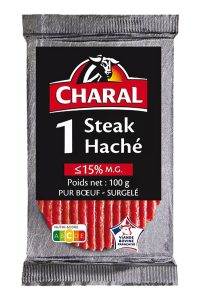
She was a brake, when she should have been an encouragement. I can testify as an innovation advisor for distributors and industrialists : At the time of the COVID crisis, All current projects have been stopped. You have to remember empty rays during this crisis : people bought basic products and not innovation. Then came inflation : 21 % price increase in two years, It's considerable ! The number of new products fell 22 % in France in 2022 ! In 2023, Innovation has started upwards, But it is not yet at its previous level. Inflation creates an opportunity to innovate, but in another way, in order to promote product accessibility. It's hot, For example, which has just launched a steak in metropolitan France at the price of 1,50 €. I remind you that studies have shown a drop in food volumes : that means that overall, because of inflation, We eat less. The reaction of distributors was to develop promotion in volume : To buy cheaper, you have to buy more ! There are other ways to do, more useful and justified : unit sales in the example I have just mentioned or packaging to keep the product longer. Today, A third of the foods purchased is lost ! Help the consumer unless you waste, It’s innovation. So there is a lot of ways of innovating in times of crisis. This is what I try to advise my customers.
How do you see the future of organic ?
Organic is in a difficult situation for a single reason : its too high prices. The inflationary shock was terrible for organic : many of its buyers have returned to the conventional. Organic must be generalized, But stop on this price problem. In addition, These prices are sometimes exaggerated by distributors. It is often said that organic products return 20 % to 30 % more expensive on average than conventional products. Or que constate-t-on ? En GMS, The average is 70 % more expensive ! For what ? Because of exaggerated prices and the competition that signs engage : Taking zero margin on large sales, They catch up on value added products such as organic. This is called equalization. This is also what kills the organic market. And it's a serious mistake. The challenge today for distributors as well as industrialists, Wherever they are, should on the contrary be to prevent a two -speed diet to settle and to promote a good diet for the greatest number.
Regional products are generally attached to local food traditions. They also integrate new expectations of consumers, But will they not be questioned, sooner or later, by the evolution of eating behaviors ?
Non, Tradition is not opposed to modernity. Our choices, Our food tastes are linked to our culture, nos traditions, Our family habits and of course our local productions. Elderly behavior change with a need for more practicality, saving time, nomadism. But our attachment to regional products remains. The interest in local products remains and will always remain very strong.
* International Food Fair (Shit), From October 19 to 23, 2024, Paris Nord Villepinte exhibition park.